


A Closer Look at Composting in Canada
Composting programs have been a fixture across the country for many years, both in rural and urban settings. Millions of Canadians are now familiar with how to separate organic waste at home, and expect local authorities to collect and properly compost that waste.
With that said, experts in the environmental space have pointed out gaps in the system, such as the fact that some facilities are not equipped to compost all organic material, and diversion rates are not as high as they could be. Still, recent data show that composting organics is becoming more streamlined, efficient, and successful in Canada.
To get a better sense of this, it’s useful to look at how trends have evolved over time. In 2012, composting experts BioCycle did an analysis of composting across the country. Against recent Statistics Canada data, it offers an illuminating comparison.
- In 2012, Nova Scotia was considered a leader, with aggressive targets for limiting waste and increasing composting investment. As of 2019, Nova Scotia and PEI were found to be the most dedicated kitchen waste composters, at 90 and 95% of households, respectively.
- Quebec had a goal of 60% diversion of all organic waste, but a rate of only 22% in 2012. Based on 2018 figures, that number is now at 31%, and the Quebec government has said they have a goal of 70% by 2030.
- At the time in Ontario, about 40% of municipalities had curbside organics collection, and diverted more waste than any other province. However, most programs did not extend to multi-unit buildings, and unfortunately this is still the case (Some regions, like Waterloo, have just introduced plans to include composting in these buildings).
- In 2012, Alberta generated more waste per capita than any other province, and Calgary had only just launched a composting program at the time – but today, households there are more than twice as likely to compost kitchen waste than in Edmonton. As explained by Statistics Canada, this is likely because Edmonton still has a single-stream waste program, where waste is sorted at facilities. Officials there are now looking to change this.
- BioCycle found that composting rates in Vancouver were pretty low, and today, they remain so; approximately 1 in 12 households in Vancouver had access to a municipal composting program and did not use it. However, recent stats from the City of Vancouver say their overall waste diversion rate (which includes recycling and compost) is around 63%.
So, what can we glean from this evolution? As BioCycle explains, investment is needed on part of local authorities as well as private companies, who provide facilities and expertise to compost organic waste. Access is also crucial, as we see in the case of Calgary and households in the Maritimes. Over the past decade, much improvement has been made for composting in Canada, but there’s still a long way to go. We’ll examine this further in a discussion about bioplastics and more, next month.


Why Behavioural Science is Key to the Circular Economy
The field of behavioural science can seem elusive, but most of us encounter it often, whether we know it or not. From advertising slogans to labels on garbage bins, its impacts are everywhere. This area of social science deals – as you might expect – with human behaviour: how it works, why, and what interventions can influence it.
It’s also of particular interest in the environmental space, especially since the revelation that much of climate change is caused by human behaviour. Experts in the climate change and circular economy realm often use behavioural science to determine what interventions will push us toward more sustainable behaviour. It’s a worthwhile endeavour, since data has shown behaviour can indeed be influenced with a targeted approach; recycling and waste management offers a good example.
Any change or improvement in a waste collection system, like adding a new bin or reducing contamination, should come with education that considers current consumer behaviour. An article from Circular details how cities in the UK have done so successfully, with actions as simple as adding bottle-shaped receptacles to public collection bins, or showing a physical display of daily waste collected in busy areas. These interventions were enacted to reduce recycling contamination, a problem that had stymied local infrastructure for some time. Since recycling programs had already been in place for decades, experts found that messaging had to shift from just telling people to recycle, to educating them – with a positive, action-oriented tone – about the impacts of contamination.
This was achieved through both information campaigns, and what’s called “nudging”. An article from the journal on Resources, Conservation and Recycling, defines nudging as something that “helps people without compulsion, but ‘paternalizes’ them with a gentle push towards the ‘right choice’”. The authors noted it’s come to be seen as “a low-cost solution for promoting pro-environmental behaviour” (the bottle-shaped receptacles are one example).
Whether it’s in government policy or an ad campaign, behavioural science is powerful. Take smoking, for example; not so long ago, tobacco companies and medical professionals alike glossed over the risks because of strong public uptake – smoking was socially condoned. When evidence of its harms became widely known, a sea change took place. Now, a mix of public-private initiatives, like strict bans on smoking areas and images of damaged lungs on cigarette packaging tell a completely different story. It’s one that directly impacted human behaviour; nearly half of all American adults smoked in 1965, and in 2018, only about 13% did.
Though the context is different, if this could happen for smoking, why not for environmental behaviours? Some may argue there have already been years of large-scale efforts to get people to participate in more sustainable actions, to little effect. But the difference now, as one expert in the Circular piece stated, is the private sector is on board in a more significant way: “Brands talk to citizens in a very different way from local authorities. That different voice is a powerful addition.”
So, how does behavioural science relate back to the circular economy? Well, a truly circular economy needs active participation from everyday consumers, private companies, and public authorities; a diverse set of actors that could benefit from thoughtful, cohesive information and initiatives. As we know from recycling examples, a circular waste management system only works if users fully participate, and they can only do so with knowledge of (and sometimes guidance toward) best practices. By using a behavioural science lens, everyone – from big decision makers to an average household – can be empowered to take the right steps.
Sustainable Partnerships: How Businesses Can Collaborate for the Planet
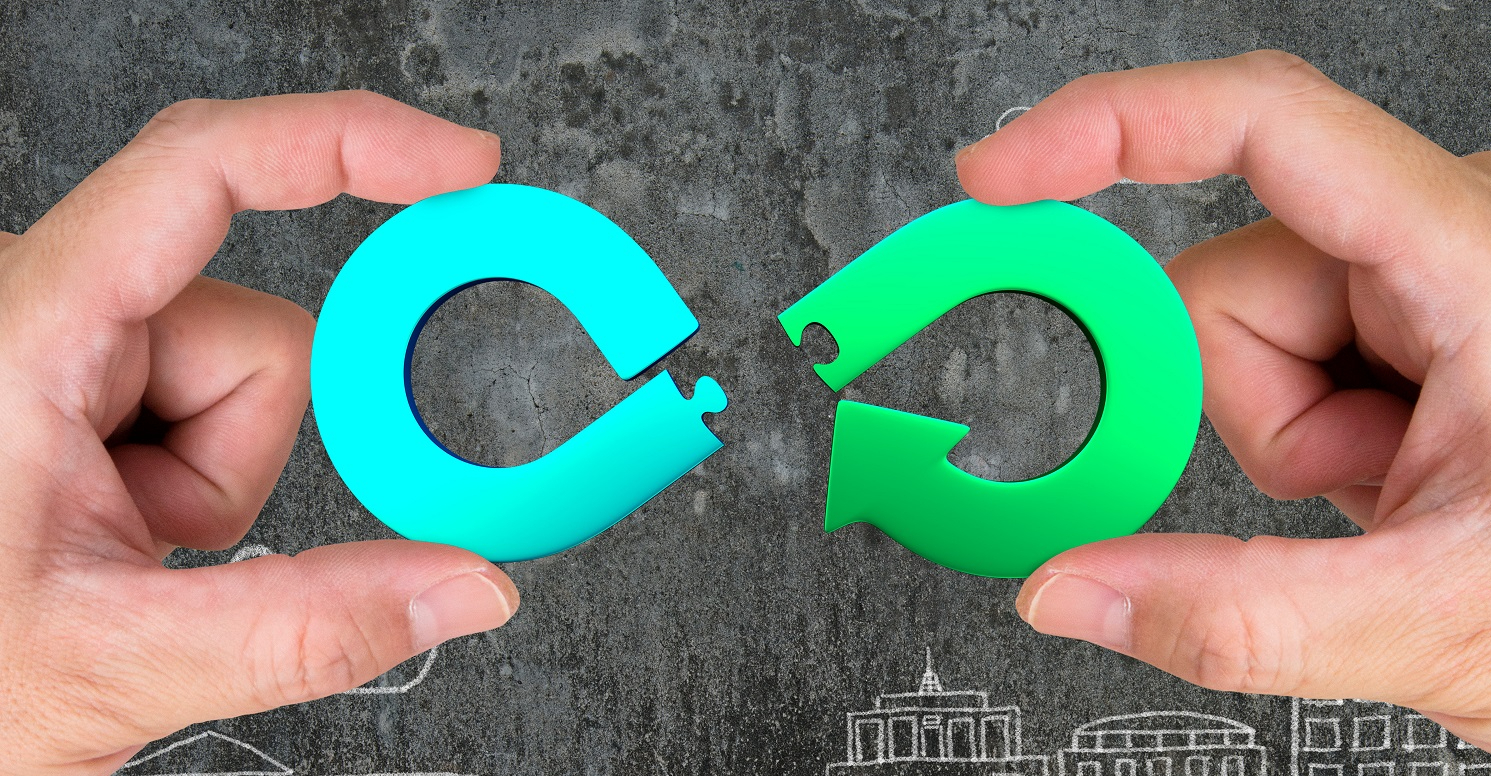
Partnerships of all kinds are common in the business world, and the average consumer encounters them more than they may realize.
Businesses often collaborate as a way to accelerate growth and profit, via creating new products or marketing to a wider audience. Think Marvel character toys included in kid’s meals at McDonald’s, or the luxury brand Balenciaga designing for fast-fashion chain H&M; these partnerships boost brand visibility and profits for both parties. In a collaboration, businesses can share resources, brand power, and marketing tools to make it mutually beneficial. Now, with more businesses looking toward Corporate Social Responsibility (CSR) and sustainability goals, there’s room for partnerships that could benefit the planet.
Integrating sustainable, circular practices takes time, and can require major shifts away from entrenched practices; think switching to new packaging for an entire product line, or revamping a formula with sustainable ingredients. This is where environmental (or ESG: environmental, social, and governance) partnerships can be helpful, as businesses can share expertise and resources to meet sustainability goals.
An ESG partnership can take many forms, from something concrete like sharing supply chain resources, or more abstract, through knowledge-sharing. An example of this is seen in the Canadian Roundtable for Sustainable Beef, established in 2014 between industry partners across the country. After widespread recognition of the steep environmental cost of beef cultivation, invested parties created a set of shared agreements to reduce the environmental impact of their practices.
The consulting firm Coro Strandberg names the many benefits to sustainability partnerships, including sharing risks, influencing larger policy, attracting funds, demonstrating leadership, and accelerating innovation. Indeed, many large corporations are hesitant or slow to change to sustainable practices because of the cost and risk involved, and the lack of large-scale innovation – finding a cost-effective and mass-produced source of sustainable packaging, for example, can be difficult and resource-intensive.
Another benefit of such partnerships is the opportunity to reduce greenwashing, which is when corporations overstate, exaggerate, or make false claims about their environmental actions. When a partnership involves multiple stakeholders, there are more audiences to be accountable to, and more layers of expertise at play. Of course, greenwashing can still be present, but when standards are agreed on, it’s less likely that the change will just be a flash in the pan. With the sharing of risks and assets, there’s more chance for it to last.
The benefit of having widespread industry standards also can’t be overlooked. Many corporations are multinational and have stakes, relationships and activities in multiple countries, so having a clear set of sustainability guidelines can have a global impact.
Right now, sustainable/ESG partnerships are still in their infancy, but they are growing in popularity. The MaRS Discovery District, a group in Canada focused on innovation and sustainability, details the many global partnerships currently at work, like the Marine Stewardship Council Certification for sustainable seafood, or the World Business Council for Sustainable Development. These partnerships, and many others, leave the door open for concrete action that will make sustainability an achievable goal.
At 5REDO, helping innovators meet their sustainability goals is one of our core activities. We are always open to partnering with companies and organizations to craft and execute sustainability initiatives. Together, we can work to discover solutions, build innovations, and move toward a more sustainable future.

Responsible Consumers: The Role of At-Home Waste Sorting
The concept of Extended Producer Responsibility (EPR) is often discussed in the circular economy space, the idea being to have producers shoulder more burden of managing, recycling, and disposing of waste. It also calls attention to the need for producers to consider how their product will be handled by consumers, waste infrastructure, and whether it can be made more environmentally sound overall.
The ethos behind EPR stems in part from the unfair blame and responsibility placed on individuals for their environmental behaviour. We now know that large corporations and the world’s wealthiest one percent are responsible for the lion’s share of greenhouse gas emissions and other environmental harm. Yet, many consumers are all too familiar with directives about limiting meat consumption, not buying fast fashion, or reducing their use of plastic. While these are all commendable (and sometimes necessary) activities, EPR is part of the pushback to shift the narrative from each person’s “carbon footprint”, to calling on the world’s top actors to do better.
With this in mind, how should we characterize the largely individual task of sorting household waste? Recently, residents in Victoria, Australia were introduced to an updated collection system, with a new purple-lid bin to sort out glass items. The program also set the target of having residents include “soft plastics” in the already-established yellow bins by 2030. Currently, residents are asked to store soft plastics at home and drop them off at a designated location or recycling centre, although unfortunately, the inconvenience means much of that waste ends up in garbage bins. Many Australians applauded the introduction of a new bin for making their lives easier; though with four different bins, and some remaining exclusions as to what goes in each, the expectations on individual residents are still significant.
Of course, every waste collection program comes with accompanying education for the public – there’s an adjustment period for any change, and adding a new bin may indeed make lives easier in the long run. Since recycling was first introduced in North America, waste collection has gone through many iterations, each with a change meant to make the collection, sorting and disposal more streamlined.
In Canada, for example, each major city has slightly different approaches to collecting. Many use the widely recognizable blue bin (plastics and glass), black bin (cardboard and paper), and garbage bin system, with many cities having adopted a green bin for compost. There are also incentives to produce less garbage; in many cities, green bins are collected weekly, but garbage, only bi-weekly. In Montreal, recycling isn’t sorted in households at all, but at a facility post-collection.
The decisions for each city depend on a number of factors including budget, population, resources, and waste management infrastructure. It’s also important to remember that a robust recycling system, such as the four bins in Victoria, Australia, doesn’t necessarily equal robust management. Indeed, lots of waste (sometimes even organic material), is diverted to landfills when it is unable to be properly sorted at a facility; think products like medication blister packs, which are made with a combination of plastics, aluminium, and paper.
Ultimately, consumers can’t be taken out of the equation when it comes to waste management. Even when industry and government partners take on more responsibility by providing resources, information, and management, waste generated at home will always be a factor. Education and initiatives to get the public on board are important, otherwise, any system runs the risk of being too convoluted and pushing many people to opt out altogether.
Image courtesy of concreteplayground.com.

Zeroing in on Microplastics
By now, the woes of plastic are common knowledge: it’s wasteful, hard to recycle, and can harm the environment in myriad ways. Much like combustion-engine vehicles, plastic use is often a target for change, since it’s so prevalent in our everyday lives. More recently, the conversation has included an even more problematic component to this pervasive material: microplastics.
What are microplastics?
Though the meaning is in the name – small, even microscopic particles of plastic – there are actually two different components. First, there are the plastics created intentionally small, such as the so-called “microbeads” used for exfoliation in some toothpastes or facial cleansers. There’s been a lot of buzz around these particles specifically, since they wash easily down the drain, end up in our waterways, and are difficult to capture or track.
The second aspect of microplastic refers to pieces that break down or shed from a larger plastic product – think of twist-ties on loaves of bread, or bits of a plastic bag ripped in the recycling process. When we drive, microplastic particles from tires are even shed into the atmosphere, most of them too small to see with the naked eye.
Layers of harm
We already know that plastic is difficult to reuse and recycle, and even products that are technically recyclable are often not, due to lack of proper infrastructure. Thus, microplastics pose even more of a challenge, since in most cases, we can’t even capture them to dispose of, let alone reuse or recycle. They flow easily into our water, are carried by the wind into our natural environments, or – even more concerning – end up in our bodies.
This happens in a variety of ways, from things like eating out of a plastic container, using plastic kettles and baby bottles, or even just inhaling microscopic particles that float through the air. Though it makes sense that these tiny particles can end up being ingested, what’s concerning is that we don’t have enough long-term research about the impact it has on humans and animals (many species, such as fish, have been found with microplastics in their system). There is some evidence that compounds used in plastic and microplastics can be disruptive to the endocrine system (which regulates our hormones), but as far as ongoing exposure to microplastics, there’s still a lot we don’t know.
What can we do?
Since microplastics are hard to track, let alone study, the situation can look pretty bleak. But if anything, this should be even more motivation to stop using and producing so much plastic, and in turn, stop generating microplastics. That means not only making the shift in our daily lives away from plastic products, but continuing to demand better from producers and those in power. There’s also the need for more information, which can help us determine the impact microplastics are having; California recently introduced legislation that helps measure microplastics in the ocean.
In terms of technological advancement, there’s the case to be made for biodegradable plastic, a frontier that many companies are throwing resources behind. However, it’s crucial that global standards are developed for the compostability of these plastics (some of which has been developed in the U.K.), to ensure these claims are not greenwashed.
Our plastic problem is massive, and microplastics have an outsized impact – it’s important that they’re not left out of the conversation and efforts for change.

Visit Our Virtual Booth at 2022 Conference on Canadian Stewardship
The Conference on Canadian Stewardship 2022 will be held on September 20-21 in the Metro Toronto Convention Centre. The theme of the conference is on Extended Producer Responsibility’s Journey to a Circular Economy: Policy, Practice and Progress.
5REDO is pleased to participate in the virtual exhibition of this year's conference. We are inviting you to join the conference and visit our virtual booth.
Register for the Conference

The Electric Vehicle Market is Booming. How Can We Keep It Circular?
Record-levels of inflation have hit the gas pump hard, where in some cases, the cost of filling your tank has doubled. Meanwhile, demand for electric cars – even from stalwart brands like Ford – has skyrocketed, no doubt driven by price fluctuations and uncertainty.
In climate change discourse, cars with combustion engines have long been a sticking point, and for good reason – a sustainable alternative is sorely needed. While the investment around electric vehicles seems like a natural step, could there be consequences to the demand? What resources will we need, and how can we ensure circularity as electric vehicle production ramps up?
In a recent paper for Nature Electronics, Jessika Luth Richter stated that we need true circularity – including global policies and agreements – in order to ensure the electric vehicle life cycle doesn’t inadvertently cause harm. Richter outlines common sustainability issues like their battery production, which is resource-intensive and uses minerals like lithium, cobalt, and nickel, often mined from socially or environmentally sensitive areas. Moreover, these materials usually come from regions that are less likely to have adequate waste management infrastructure.
Recycling and reusing can also be trickier with electric vehicles, largely because of their batteries. Most electric vehicles use lithium-ion batteries, a complex item that requires unique technology to break down for reuse, or to dispose of (Our team at 5REDO has published an overview of current technology to reusing and recycling these batteries). Although there are ongoing innovations for working with these used batteries, the technology isn’t yet widespread, and given current demand, it needs to be.
There’s also the question of the reuse market. Since combustion engines have been the dominant form of vehicle for decades, the recycling and used parts market is very established. The same can’t be said for electric vehicles, which begs the question of recycling capacity, especially given the surge in demand. However, as a McKinsey consultant stated in a CNBC article, that infrastructure will naturally grow over time, when current electric vehicles reach the end of their life cycle.
When it comes to the question of whether electric vehicles are a truly sustainable alternative, experts say we need to look at that overall life cycle. While electric vehicle production causes carbon emissions and resource depletion, the life cycle of the actual car is longer, and emits next to nothing when driven, according to a resource page by the Environmental Protection Agency (EPA) in the U.S. Some have said it’s like comparing apples to oranges – the essential components are different, so our standards for measuring life cycle have to shift.
It’s also important to consider the wider electrical grid, which in most regions of the world, is still mainly supplied by fossil fuel-burning methods like coal. For electric cars to be more impactful, we need to make the grid more sustainable. An article from Youmatter mentions how future technology could see old lithium-ion batteries used to help power buildings and machinery, a truly circular concept. So, while electric cars may not be the ‘magic bullet’ to fighting climate change – no single thing is – their technology is an important step in the right direction. While critics are quick to point out the resource-intensive aspects, those criticisms often tie back to larger needs, like de-carbonizing the electrical grid, and having large-scale investment in sustainable, circular technologies.

5REDO Exhibiting at the Waste & Recycling Expo Canada
5REDO is excited to participate in the Waste & Recycling Expo Canada happening on September 27-28, 2022 in Mississauga, Ontario. Visit us at Booth #555 in the International Centre and use the code 5REDO for free registration. We look forward to seeing you at the Expo.
REGISTER TODAY FOR FREE

Going Digital for the Circular Economy
In a matter of decades, digital technology has transformed how we live, work, and communicate. More than that, widespread digitalization is a critical piece in the transition to a circular economy, in ways both big and small. From sending electronic receipts to streamlining global supply chains, digitalization is a frontier waiting to be further harnessed.
At first, the two concepts may seem unrelated; we often think of the digital world as making our lives more interconnected and convenient, but not necessarily more sustainable. In truth, even the simple ability to access quality information – and quickly share it – can push sustainable innovation further than we think.
The OECD (Organisation for Economic Co-operation and Development) has published extensive work on this, stating that various digital technologies, “facilitate the transition to a more resource-efficient and circular economy, by helping to overcome obstacles that stand in the way of the large-scale deployment of greener business models, as well as a more effective delivery of circular economy policies.” The OECD points to things like artificial intelligence, data analytics, and even 3-D printing as being important tools in transitioning from resource-intensive, wasteful production.
Put simply, the digital world gives us better access to information, and the tools to implement that information in a more efficient manner. In the face of the climate crisis, that’s essential.
One of the main sites of change lies in making supply chains more circular, something we’re always thinking about at 5REDO. An article from the tech site Technology Review outlines the ways digitalization can help to, “capture, store, and analyze consumption patterns, which in turn helps organizations make better decisions.” They provide the example of material use, which in most sectors, generates about 70% of greenhouse gas emissions (GHG): “If businesses have insights into how full their aircraft, ship, or truck is, they can determine in real time how efficient their delivery will be. This translates to better efficiency, lower fuel costs, shorter delivery cycles, and reduced GHG.”
With the advanced technology available for data analytics and visualization, companies, governments, and organizations are able to test new models and examine risks in a virtual setting. In the pre-digital era, introducing a new idea or product would require labour and resource-intensive work – and cause more waste. Now, employing sustainable principles can be done in a measured, efficient, and arguably more profitable way. After all, the same digital tools have helped researchers measure and project for climate change – and it’s where solutions can come from, too. An article from the World Economic Forum says it best: “Without a coherent and inclusive global digitalization effort, we will never be able to achieve climate goals in a timely manner.”
As with other climate change efforts, we have to act now. The consulting agency Deloitte has said there’s a “window of opportunity” to implement the benefits of digitalization, describing it as a “major opportunity for individual companies to re-think their future, their strategy, their value chain, their value creation, and their operations.”
With all of this considered, we see that there’s much more to the digital world than everyday convenience. A 3-D printer isn’t just a cool gadget; it can radically change global resource use. An open data-sharing platform isn’t just there to help employees communicate; it can be a site for critical sustainability research. Ultimately, it’s important to foster a mindset shift, so we think of digitalization as a foundational tool for social, economic, and environmental change.

A Cleaner Checkout: Can No-Waste Grocery Stores Make an Impact?
If you’re trying to integrate circularity into everyday habits, your grocery order is a good place to start. Despite reusable bags or shopping local, there’s a familiar roadblock: the pile of packaging left behind. From cellophane-wrapped vegetables, fruit in clamshell plastics, and styrofoam meat packaging, an average grocery order can feel like a never-ending strain of waste – and in fact, it comprises about one third of all household waste in Canada.
What if you could make a trip to the store sustainable, from aisle to checkout? This is the idea behind zero-waste grocery stores, a trend gathering speed around the world. Canada alone has a variety, such as Ottawa’s NU Grocery, Toronto’s Unboxed Market, and Vancouver’s Nada Grocery. The proliferation of these stores has come with the heightened awareness about waste and the climate crisis, targeting consumers who want to live more sustainably.
Though there’s some variance between stores, a zero-waste grocery operates by having customers bring in not just reusable bags, but containers to fill with items that would normally be in packaging, like cereal, beans, snack foods, and more. At NU Grocery, you weigh your empty container at a ‘taring station’ and write it down; at the checkout, that weight is deducted from the amount of product inside. Items like milk and yogurt are sold in glass containers, with a deposit.
So, why haven’t these sustainable stores taken over? There are a number of reasons, and as you might expect, cost – both to the stores and consumers – is a major one. It’s difficult for smaller zero-waste stores to compete with the pricing large grocery chains have access to, meaning their selection is generally smaller, and pricier. Furthermore, preferred materials like glass or compostable paper tend to be more expensive to source (this is also why they’ve been slow to crop up in larger stores).
There’s also the cost of buying a stock of reusable containers to shop with; while these don’t have to be expensive, that may be prohibitive for some consumers. With cost of living on the rise, groceries are where many people feel the hit, making it less likely that the average customer will choose a pricier zero-waste store. Aside from cost, shopping zero-waste tends to require more time and effort, mainly because you need to fill up each bulk item and weigh it, which is another potential deterrent.
Finally, there are some important truths to acknowledge about food packaging. First, it can help preserve food – and in a place like Canada, where some fruits and vegetables travel thousands of miles from field to store, that’s important. Though packaging waste is certainly a problem, so is food waste; this blog post points out that emissions from food decomposition can sometimes be worse than the packaging itself.
Second, important nutrition information and ingredient labeling comes on food packaging. This might not be a problem if you’re buying familiar items, but for new customers or those with allergies or dietary restrictions, information is important, even something as simple as an expiry date.
While these are all valid reasons why zero-waste stores haven’t caught on widely, they do address the major problem of packaging waste. Although many grocery chains have taken steps to end the use of plastic bags, for example, we are a long way from more circularity in food packaging. Even if you aren’t able to do all of your shopping at a zero-waste store, the principles they employ and promote should encourage shoppers – and stores – to do better.
 Originating from Barcelona, Laia’s educational journey led her to pursue secondary studies in the south of France. Her Bachelor’s degree in Economics and International Management allowed her to develop an analytical mindset. During her Master’s in International Business and Management, she engaged in numerous research study cases and actively participated in the creation of different business plans. This helped her develop an ability to critically analyze and address the strategic challenges that companies encounter.
 Andre has over 5 years of industry experience in project management, polymer and composite processing, materials characterization, and product development. He earned a Bachelor’s degree in Chemical Engineering from the Federal University of Santa Maria, Brazil, and a Ph.D. in Materials Science and Technology from the Federal University of Rio Grande do Sul, where he focused on Polymer and Composite materials. In 2012, he founded a design and manufacturing company specializing in biocomposites made with natural fibers, which he successfully sold in 2015.
 As an expert in sustainability, life cycle assessment, circular economy, and green chemistry, Nicolas possesses valuable skills and knowledge that can assist companies in developing and implementing sustainable and environmentally-friendly business models. They can achieve this by utilizing eco-friendly materials, improving manufacturing processes, reducing waste and hazardous chemical use, and advocating for the use of safer and more sustainable alternatives.
 Karan is an experienced professional who has worked in multiple geographies and roles along his career. He holds a total of 10+ years of experience in manufacturing operations, and has focused his efforts towards finding solutions for waste recovery and making recovery economical for industries.
  With several years of research experience in France and Canada, Fabien lends his expertise and passion for enzymology and microbiology to 5REDO’s sustainability innovation plans.
  With her significant hands-on experience in developing and characterizing biological and chemical systems, Vicky plays a key role in 5REDO’s efforts toward developing novel products and technologies that offer improved circularity and sustainability to the industry and society.
  As a recent graduate of chemical engineering from the University of Waterloo, Kyle brings his passion for impactful innovation and his experience with novel recycling processes to 5REDO to support our technology development initiatives.
  As our Senior Research Scientist, Hormoz draws on his eight years of industrial and nine years of academic research experience in the areas of polymer science and engineering to develop new solutions for advancing circularity and sustainability.
 Shauna is a freelance journalist that covers a wide range of topics, including health, education, the environment, travel, lifestyle trends, and more. She holds a Master of Journalism from Carleton University, and a Bachelor of Arts (Honours) in Global Development from Queen’s University.
 By leveraging her expertise in life cycle analysis and process engineering, Ophela helps 5REDO to take a holistic approach to the development of circular solutions and technologies.
  As the co-founder of 5REDO, Forough brings her expertise in supply chain management, business operations, inventory control, and revenue management to support the implementation of circular solutions within different industry sectors.
 With a passion for driving change and creating impact, Mahdi co-founded 5REDO to promote circular economy principles in Canada. He’s an alumnus of the 2021 Ellen MacArthur Foundation’s ‘From Linear to Circular Programme.’ Mahdi played a pivotal role in developing and managing the University of British Columbia’s (UBC) Circular Economy Seed Funding program, fostering partnerships between companies and academic researchers to co-create circular solutions.