

Going Beyond Re-Melting to Meet Plastic Recycling Goals
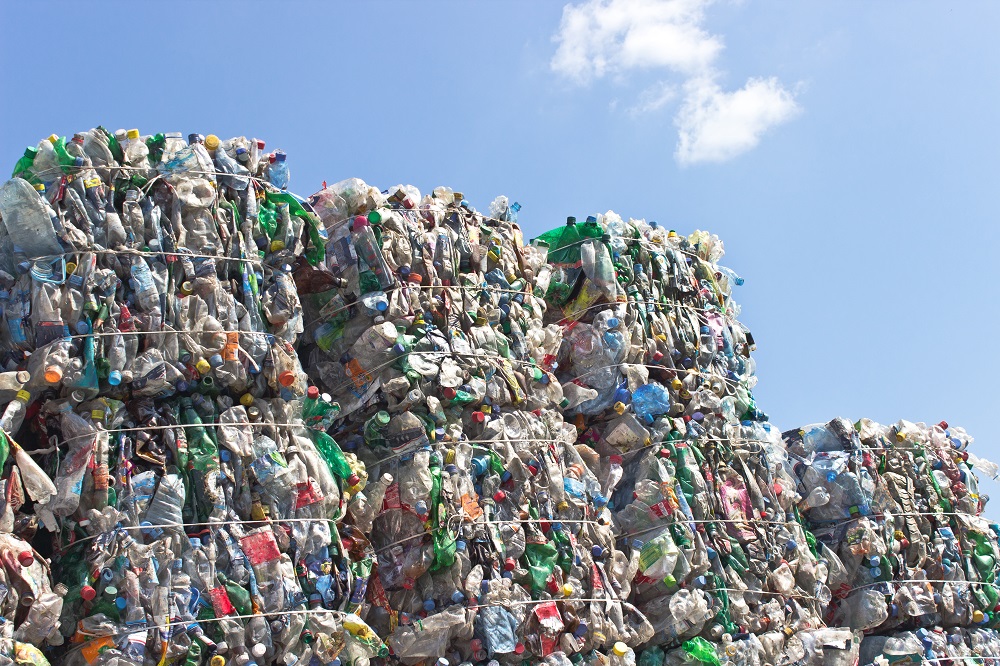
During the 2018 G7 summit in Quebec, the Canadian Government championed the Ocean Plastic Charter, which articulates a number of goals to alleviate the environmental impact of plastic use. Among those include a minimum of 50% recycled content in plastic products, where applicable, by 2030 and the recovery of 100% of all plastics by 2040. Indeed, the Charter is not the only place where such commitments regarding plastic recycling can be found. The European Commission has also set a binding recycling target of 55% by 2030 for plastic packaging waste, which compared to 2014, corresponds to more than twice the amount of the total recycled material.
With all these targets in the horizon for the next 10 to 20 years, the question arises here is whether the current recycling technologies can give us all we need to meet our ambitions for managing the end-of-life plastic products. Of course, the recycling technology is one part of the solution, and other enabling factors, such as design for recyclability and collection systems, are essential as well. However, considering the limitation of the commonly-used recycling processes, it is deemed inevitable to establish new scalable technologies that can considerably increase the rate of plastic recycling.
Currently, the most common method for recycling plastic waste is through mechanical processes, which typically includes sorting, washing and grinding. The resulting ground recycled plastic can then be thermoformed into new plastic products. While being simple and easy to scale up, mechanical recycling only allows the reprocessing of the same material for a limited number of times. Since additives and contaminants are not removed and tend to accumulate, the physical and mechanical properties of the material degrades with each reprocessing cycle. Also, depending on the requirements of the final product, the recycled material cannot get the chance of being reused due to health and safety concerns.
Such drawbacks have encouraged the development of another path for processing plastic waste, known as chemical recycling. Through this approach, with the help of catalysts, heat, and/or pressure, a plastic type is converted into its starting material (monomers that can be repolymerized to yield virgin-like plastics), other raw chemicals, or fuels. Being capable of cleaning the waste at the molecular level, chemical recycling represent a valuable solution to produce high-quality plastic feedstock.
Despite their promise, most chemical recycling processes are not yet economically attractive. However, our commitment to building a circular economy which requires significant improvement in the end-of-life management of plastics has stimulated a great deal of interest and investment towards making the technology more economically and energetically favourable. One strategy is to combine mechanical and chemical recycling in a single facility where, for example, the residues of mechanical recycling could be refined by chemical processes.
The years to come are expected to see a growth in technology and value chain development with respect to chemical and depolymerization techniques. The adoption of this approach also calls for the introduction of new technical standards to facilitate the use of virgin-grade recycled polymer in the same applications of virgin polymers. Comparing mechanical and chemical recycling processes through the life cycle assessment methodology help determine which approach offers better environmental performance for specific plastic types. Next to the advancement in mechanical recycling and sorting techniques, these efforts can pave the road for meeting our plastic recycling goals in the next decades.


5R Solutions in the Vancouver Globe Forum 2020
In February of 2020, another Globe Forum event, by Globe Series, took place in Vancouver. It brought together the stakeholders in the sustainable and clean economy from Canada and around the world to share knowledge and identify collaborative opportunities. Besides talks and panel discussions, the Forum featured an Innovation Showcase in five thematic clusters of Bioeconomy/Circular Economy, Mobility, Smart Cities, Carbon Productivity, and Oceans and Plastics.
In this article, we review some of the 5R solutions displayed in this exhibition. At 5REDO, we help businesses assess and implement these 5R strategies to enhance circularity across their operations.
Renew
Turning waste into carbon. Titan Clean Energy Projects in Saskatchewan is converting wood and agricultural residues into carbon-rich substances for applications ranging from animal feed additives to soil amendments. The company also processes this biocarbon, also known as biochar, into activated carbon which owing to its porous structure can be used as an absorbent in, for example, water and air purification.
Painting with soybeans. Soyaoil Coatings Canada in Ontario has developed sustainable paints and coatings made of 98% plant-based and natural mineral ingredients.
Binding clay through enzymes. Cypher Environmental in Manitoba is offering an enzyme-based biodegradable road stabilizer called EarthZyme that increases the density and mechanical strength of soils with high clay content and therefore improves the durability of the infrastructure built upon them.
Hemping the composites. Natural Fibre Technologies in Alberta is processing locally sourced hemp stems into fibers and wood chips next to manufacturing biocomposites and added value products from these natural resources.
Recycle
Breaking carbon bonds. Pyrowave in Quebec has invented a microwave catalytic depolymerization technology that can break down polymers such as polystyrene (PS), polypropylene (PP) and polyethylene (PE) into their basic constituents, which can be used to make new plastic resins identical to virgin plastics.
Squeezing out aerosol cans. Despray Environmental based in the Netherlands has designed a unique system to recapture all liquid, metal and gas resources embodied in aerosol containers. The recovered propane is compressed back to a liquid state for reuse as fuel.
Reduce and Reuse
Dispensing with the bottles. Bevi based in Massachusetts is manufacturing flavored and sparkling water dispensers for offices. Besides reducing the consumption of bottles in mass-produced beverages, the company is offering service to its customers with refilling and reusing the flavor containers placed in its machines.
Remanufacture
Giving second life to IT devices. Compugen in British Columbia administers an IT asset disposition program called Green4Good in which aged IT equipment go through a refurbishment and/or recycle process aiming to maintain the value of parts and materials in the cycle.
The Enabling Role of Logistics for the Circular Economy
Let me start this article with a question. If you look around in your house, how many cell phones can you find that are not being used anymore? I myself traced four mobile phones, two of them sitting in a box from 10 years ago. Given the presence of some precious metals in these devices, I feel responsible for preventing their embodied resources to flow back in the material supply chain. The situation is more alarming when we consider the rapid rise in discarded electronics, such as phones, laptops, fridges, sensors, and TVs, that are not only contributing to a huge loss of resources but also containing substances that pose environmental and health risks.
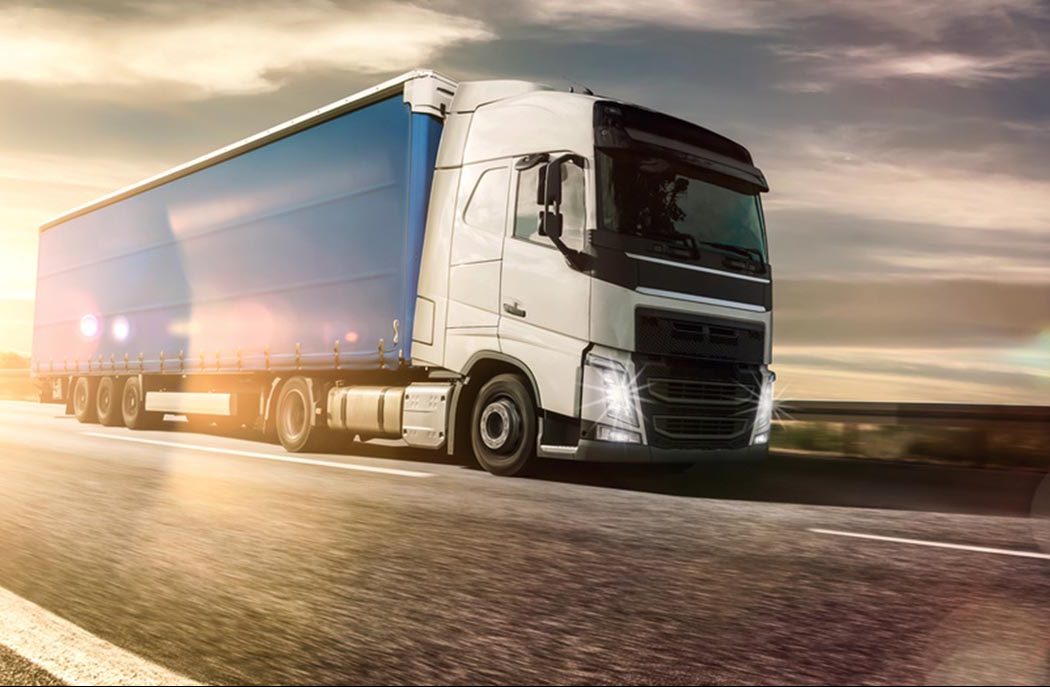
In circular economy, we are aiming to maintain the value of parts and materials for as long as possible. Implementing circular strategies requires understanding both the technical feasibility and the logistics needed to recover and redistribute materials effectively. This entails much more control over the flow of products to ensure that circular strategies such as repair, remanufacture, and reuse can be efficiently used over several lives of each product. In this regard, logistics and transportation operations play critical roles in the success of circular business models and the scaled-up implementation of circular economy approaches across industries.
For a long time, the forward logistics has powered global trade through the transport of materials, goods and information. And now, with our goal of advancing towards circular economy, the reverse logistics becomes more and more important to manage the return, recovery and remanufacture of products entering the economy.
This aspect of circular economy can certainly benefit significantly from the rapidly growing field of digitization, e.g., the Internet of Things, to enable seamless tracking of products during the use phase, besides facilitating return and recovery planning. The collected data can also guide future design and decision making to optimize the execution of circular strategies.
Needless to say that in a holistic approach, the benefits of logistics activities to circular economy can only be realized and maximized when combined with other strategies. For example, encouraging consumers to participate in return logistics may call for awarding customers for return, or adopting a use-based business model, in which manufacturer retains product ownership and customers pay for the use.
In addition, some of the challenges imposed on the logistics of circular economy, such as poor predictability of material streams and small batches, signifies the importance of collaboration and network building to speed up our transition to large-scale and cost efficient uptake of circular strategies.
Going back to the example of mobile phones and the resources lost when these devices reach to their end-of-use term, companies like Fairphone, based in the Netherlands, has built the business model and the logistics to recycle old mobile phones besides offering its own brand of cell phone that is more obliging to the principles of the circular economy, particularly repairability and remanufacturability. Such business initiatives are important and need to be extended to other electronic devices as a means to address the growing e-waste problem.
 Originating from Barcelona, Laia’s educational journey led her to pursue secondary studies in the south of France. Her Bachelor’s degree in Economics and International Management allowed her to develop an analytical mindset. During her Master’s in International Business and Management, she engaged in numerous research study cases and actively participated in the creation of different business plans. This helped her develop an ability to critically analyze and address the strategic challenges that companies encounter.
 Andre has over 5 years of industry experience in project management, polymer and composite processing, materials characterization, and product development. He earned a Bachelor’s degree in Chemical Engineering from the Federal University of Santa Maria, Brazil, and a Ph.D. in Materials Science and Technology from the Federal University of Rio Grande do Sul, where he focused on Polymer and Composite materials. In 2012, he founded a design and manufacturing company specializing in biocomposites made with natural fibers, which he successfully sold in 2015.
 As an expert in sustainability, life cycle assessment, circular economy, and green chemistry, Nicolas possesses valuable skills and knowledge that can assist companies in developing and implementing sustainable and environmentally-friendly business models. They can achieve this by utilizing eco-friendly materials, improving manufacturing processes, reducing waste and hazardous chemical use, and advocating for the use of safer and more sustainable alternatives.
 Karan is an experienced professional who has worked in multiple geographies and roles along his career. He holds a total of 10+ years of experience in manufacturing operations, and has focused his efforts towards finding solutions for waste recovery and making recovery economical for industries.
  With several years of research experience in France and Canada, Fabien lends his expertise and passion for enzymology and microbiology to 5REDO’s sustainability innovation plans.
  With her significant hands-on experience in developing and characterizing biological and chemical systems, Vicky plays a key role in 5REDO’s efforts toward developing novel products and technologies that offer improved circularity and sustainability to the industry and society.
  As a recent graduate of chemical engineering from the University of Waterloo, Kyle brings his passion for impactful innovation and his experience with novel recycling processes to 5REDO to support our technology development initiatives.
  As our Senior Research Scientist, Hormoz draws on his eight years of industrial and nine years of academic research experience in the areas of polymer science and engineering to develop new solutions for advancing circularity and sustainability.
 Shauna is a freelance journalist that covers a wide range of topics, including health, education, the environment, travel, lifestyle trends, and more. She holds a Master of Journalism from Carleton University, and a Bachelor of Arts (Honours) in Global Development from Queen’s University.
 By leveraging her expertise in life cycle analysis and process engineering, Ophela helps 5REDO to take a holistic approach to the development of circular solutions and technologies.
  As the co-founder of 5REDO, Forough brings her expertise in supply chain management, business operations, inventory control, and revenue management to support the implementation of circular solutions within different industry sectors.
 With a passion for driving change and creating impact, Mahdi co-founded 5REDO to promote circular economy principles in Canada. He’s an alumnus of the 2021 Ellen MacArthur Foundation’s ‘From Linear to Circular Programme.’ Mahdi played a pivotal role in developing and managing the University of British Columbia’s (UBC) Circular Economy Seed Funding program, fostering partnerships between companies and academic researchers to co-create circular solutions.