


The Hidden Value of a Waste Audit
Many companies are used to conducting audits of their activities, whether it’s for efficiency, employee satisfaction, or ways to save money. In an era where more and more businesses are transitioning to sustainable practices, why not add waste—its creation and how to reduce it—to regular auditing work?
Reducing waste is a broad goal, something many organizations want to prioritize. To conduct circularity integration effectively, it’s important to have clear, accurate information about where to start, and that’s what a waste audit can provide. Business Development Canada (BDC) defines a waste audit as a study of the quantity and type of waste produced, and also what’s being done with it, breaking down “how much waste is being recycled, composted or sent to landfills or for incineration.”
In Ontario, many businesses, from hotels to construction giants are already required to conduct a waste audit, and devise what the province calls a Waste Reduction Workplan.
Often, businesses are unaware of how much waste they’re generating in the first place, or that it might be impacting their bottom line—and that there are sustainable alternatives that can actually save money in the long run.
Though it sounds rigorous, a waste audit can actually be as simple as a small company assessing the weight of what goes into each of their office waste bins and checking for contamination, which is a major problem in many waste streams, no matter the size.
So, where’s the real opportunity in it? First, it allows the best information possible to know how to move forward. Rather than jump in and make a costly, or even inefficient switch to a new type of packaging, for example, a waste audit can show what you’re already doing well, and where you can improve. It’s like making the transition at home to sustainable clothing: it’s not about throwing out all your existing clothes and hustling to buy up ethical swaps, as that may have useful items end up in landfill, defeating the purpose. Like so much of the transition to a circular economy, it’s about taking strategic steps toward change.
Waste audits may fly under the radar, since they aren’t the most attractive, presentable action items that can be easily marketed to customers. But they’re crucial in that they provide a closer look at daily operations, providing accurate information for how to build lasting sustainable practices. No, looking in your garbage can isn’t the first thing that comes to mind when considering how to improve habits—but with a waste audit, trash becomes less of a hassle and more of an opportunity to generate value, long-term. Techno-economic and life cycle assessments can provide further insights to support decision making for managing this waste.


What Eco-Labelling Can—and Can’t—Do for the Environment
Pick up any product nowadays, and you’re likely to find messaging related to the environment. Whether it’s a vague claim about being “green” or a certification stamp—Sustainable Forestry Initiative, B-Corp, non-GMO—it seems everything from toothpaste to furniture is making a statement about sustainability. With so many ways to call a product “eco-friendly”, limited regulation and growing consumer desire for responsible consumption, the risk of greenwashing with these kinds of labels runs high.
Can there be a real impact to eco-labelling? How can consumers, businesses and decision makers wade through the many terms and symbols to make the best choice for the planet?
As circular economy and life cycle assessment experts, we always like to clarify terms and information to get a true sense of what something can or can’t do for the environment. That’s challenging here, as not every company or producer is required to give full information about why they use certain labels, and it can be difficult to gauge the validity behind them.
Moreover, there’s the plain fact that just because something has an eco-friendly label, that doesn’t make it truly sustainable. We wrote about this in terms of the recent carbon labelling trend, and here, let’s take the Sustainable Forestry Initiative label that appears on many paper products as an example. With the sheer amount of demand for everyday items like toilet paper or cardboard, some would argue there’s no true “sustainable” way to harvest the volume of trees currently needed to feed supply.
Also, even if one material is sourced sustainably, the whole product might not be. Take a box of store-bought pasta; the cardboard could be sustainably sourced, but other elements like the plastic sheet that allows you to see the product inside is not. Same goes for furniture—while the wood or paper used might be sustainable, the chemicals used to coat the furniture can still be harmful.
Of course, no product is perfect, but this is where environmental labelling can unfortunately become a case of greenwashing. People might select a product based on a genuine desire to do better, only to be taken advantage of by what many companies may see as a trend.
So, what can consumers do? A good rule of thumb is to look for third-party certifications, not just words used as part of product marketing. For example, the United Nations Environment Programme offers a short, helpful description of what eco-labelling is really meant for, including what’s categorized in the International Organization for Standardization.
Ultimately, eco-labelling often falls into the unfortunate category so many of us wrestle with when it comes to the environment, which is that it’s “better than nothing”. But as awareness and education grows across the globe, consumers hold more power than ever before, both in what they buy and what they leave on the shelf.


It’s Time for ‘Reuse’ to Get the Innovation It Deserves
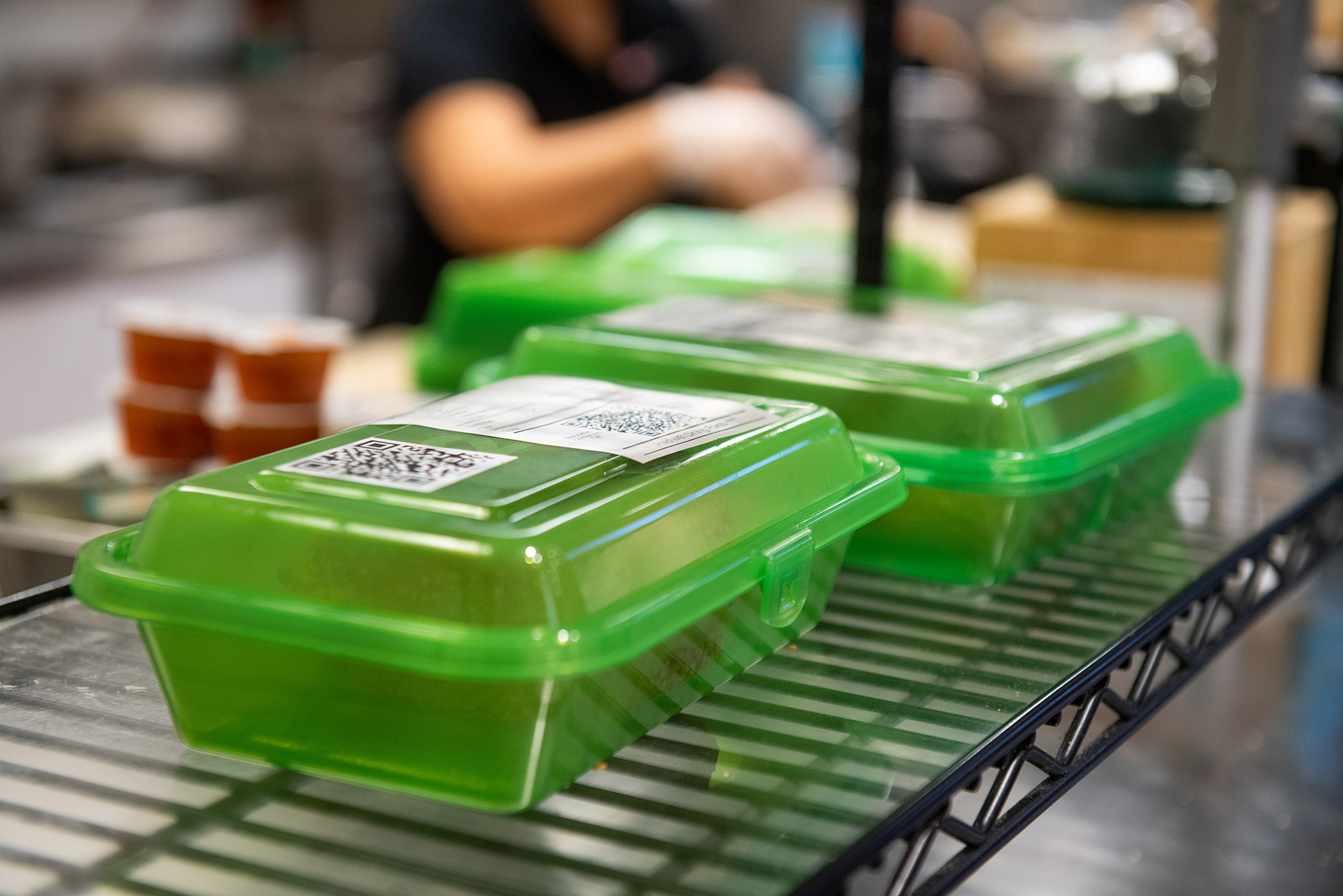
Of the three action items in the popular phrase ‘reduce, reuse, recycle’ (which forms part of our circular economy integration framework), one is often neglected: reuse. While reducing consumption and improving recycling systems is important, reuse deserves a closer look—from textiles to appliances, reusing everyday items can be a subtle but powerful choice for sustainability. This is especially evident when it comes to packaging for everyday items like groceries, takeout food and cleaning products.
The government of Canada estimates that plastic packaging (including single-use) makes up more than 37% of plastics on the market, but represents more than 50% of plastic waste generated—less than 14% of which is recycled. To date, most approaches to reducing packaging waste tend to focus on addressing overreliance (such as Canada’s single-use plastics ban) or improving recyclability. However, as we’ve explored in the past, recycling has its limitations, and there’s not yet a robust market for affordable, truly compostable products to fill the gap.
This is where reusable packaging comes in, an option that can not only meet current needs, but be cost effective for businesses and consumers if done correctly. The company Reuse Refill Canada estimates that replacing just 20% of the country’s single-use packaging will not only reduce more than 300,000 tonnes of annual waste, but could create a financial opportunity of more than $700 million.
Life cycle assessments can demonstrate the environmental benefits of reuse systems over single-use alternatives, providing data to justify the initial investment. So, why aren’t reuse systems more widely implemented? Much of it can be chalked up to convenience. To facilitate the reuse of a container, a business must implement extra education for the consumer and factor in transportation costs, storage space and resources to clean or repurpose items. For consumers, there are extra steps involved to return items, which many unfortunately won’t, even when there is a convenient option like a drop off location nearby. There’s usually also an initial cost to consumers, either because a reusable container is pricier, or simply because to refill or reuse an item, that first purchase is required.
Still, widespread innovation is ramping up to introduce reusable packaging into various industries. Food takeout services are attempting the shift, like the recent SkipTheDishes pilot program in Calgary, where the app partnered with a local reusable packaging business, allowing users to order from participating restaurants and return packaging at one of 13 recycling centres. Uber has taken on similar projects, and companies like Friendlier, Crisper Kits, Muuse, and DreamZero all work in the food industry space to help businesses switch to reusable packaging, and get consumers to participate in an effective way. Even grocery giant Loblaws recently partnered with Loop, an online service that allows customers to buy some groceries in reusable, refillable containers.
Clearly, businesses are seeing dollar signs in the opportunity, while addressing growing customer concerns about reducing wasteful packaging. Like many sustainability shifts, unless reusing is convenient, easily integrated, and well managed, it will be challenging to widely adopt—but it’s more than worth the effort.

Ending Food Waste for Good
In our first piece on food waste, we established that it’s a major global problem, one soured by the fact that millions face hunger and a rising cost of groceries. Luckily, there are many initiatives, from public health campaigns, startups, and social media groups seeing great success in the mission to end food waste.
For grocers and food producers, reducing waste can be challenging not only because of sell-by and expiry dates, but the maneuvering required to get unsold food out to where it’s needed. In recent years, a variety of businesses have stepped in to fill this need. Denmark-based Too Good To Go and Toronto-based company Flashfood connect users (via their apps) with surplus food at local grocers and restaurants, and offer options like “surprise bags” and discounted food close to its sell-by date. In the UK, Oddbox works with farms to identify produce at risk of going to waste—largely due to its odd shape—and puts together subscription or pickup boxes for nearby customers.
Grocers are also making changes, with Toronto-area chain Longo’s already hitting a target of more than 75% food waste reduction, by utilizing services like Too Good to Go, upcycling unsold ingredients, and using various metrics to gauge demand, to ensure they only supply what will be bought and used. Costco Canada works with more than 400 local organizations to donate both non-perishable and perishable goods to places in need, and at some facilities, food waste is used to create compost and fertilizer that is then sent to local farms.
While activities are going on across many industries, Canada’s National Zero Waste Council found that cohesion is needed to tackle food waste in a more significant way. After reviewing input from hundreds of stakeholders, the Council created a Food Waste Pyramid, ranking steps toward reducing food waste in the country; prevention came out on top.
The Council states that a national target is needed so that food producers, stores, and municipalities can have a framework to work from, ideally supported by environmental impact assessments to guide decision-making. Another major step identified is reducing confusion over food labels, so consumers can better discern between “sell by”, “best before” and so on. This would not only reduce waste at the household level, but make it easier for suppliers to move unsold perishable products to where they’re needed.
Of course, amidst larger structural change, individuals play an important role, as we know food waste at the household level is significant. A poll from the Canadian Centre for Food Integrity found individual consumers feel they’re “most responsible” (at 59%), for reducing food waste, closely followed by restaurants and grocery stores. With this in mind, a number of efforts target consumer-to-consumer waste reduction, such as Facebook groups like Buy Nothing, which facilitate swaps of used or surplus items, including food.
Individuals can also reduce food waste by being more judicious when grocery shopping and not over-buying. Cooking at home rather than ordering in, freezing or better preserving produce in your fridge, and also composting when necessary—and properly—is important. If you have an at-home garden, you can also use food scraps to create compost or enrich soil. Making use of local food banks and community fridges to donate unused food is also a great option.
Amidst efforts to implement circular economy principles into our everyday lives, food offers many options; with so many people hungry, there’s more reason than ever to make sure nothing goes to waste.

Our Joint Work with University of Quebec Published in WIREs Energy and Environment
Many semi-durable and durable consumer goods are composed of plastic. Yet, plastic pollution is one of the most pressing environmental issues as it harms oceans and marine biodiversity. This state of affairs is worsened because plastic recycling rates remain low. Therefore, one commonly proposed solution is to improve plastic waste management to create a circular plastics economy. However, focusing on recycling management alone overshadows the consumption component and how consumers might contribute to recycling efforts. Although not alone in the overall recycling process, consumers are critical stakeholders in this because through their disposal behavior, they determine the responsible discarding of plastic through recycling. The significance of consumer engagement in driving circularity has been strongly emphasized in extant research and practice. Shifting from a linear plastic economy toward a circular one requires the active contribution of all stakeholders, especially the consumer. Hence, given the centrality of consumers' role, this paper provides an overview of the themes related to consumer engagement with plastic recycling. More specifically, the paper reveals three layers of influence on consumer plastic recycling behavior: (1) macroenvironmental factors, (2) situational factors, and (3) individual factors. This review provides scholars, practitioners, and decision-makers with better insights into the themes to consider in order to spur consumer engagement in plastic recycling.
Read the Full Article

Food Waste and the Negative Feedback Loop
In mitigating climate change, there’s often a tension—one we’ve highlighted before at 5REDO—between individual and collective action. What can individuals do to lessen their environmental impact, and when should efforts be directed toward the larger forces at play? This question is challenging, as individual action can sometimes feel futile. But as the case of food waste shows, it can have an outsized impact—for better and worse.
With groceries at their highest prices in decades and food bank use across Canada at an all time high, it’s unfortunate that food waste continues to be a major problem. The province of Ontario alone generates nearly one million tonnes of food waste every year from the production to household level, according to the National Zero Waste Council. What’s perhaps even more surprising is that nearly half of that waste is created by individual consumers. Even in areas that have an organic waste collection program, food scraps still comprise nearly 31% of residential waste that ends up in the province’s landfills.
Food waste encompasses both unused or uneaten scraps and ingredients thrown away in homes, restaurants, grocery stores, and food production sites, and also scraps that are put into green bins, but, for a variety of reasons, not ultimately composted.
While food waste is of course a social issue, it’s also an environmental one, as organic waste that ends up in landfill emits methane as it breaks down—a greenhouse gas up to 25 times more harmful than CO2. Excess food waste both leaves people needlessly hungry, and hurts our environment. (There are a number of initiatives in place, both in everyday households and industry, to mitigate food waste, which we’ll cover in a subsequent article).
It’s useful to understand why food waste happens, and the complex reasons it remains so prevalent. First, poor waste diversion is an important factor. The 2021 Census tells us that 76% of Canadian households use at-home green bins, a more than a 50% increase since 1994. This is significant, since a major part of tackling household food waste is availability of composting. However, in Ontario, for example, it’s still not enough to hit the target of a 70% reduction in food waste.
This means green bin programs need to be more rigorous about actually composting food scraps, and ensuring proper waste diversion through systematic circularity integration. Part of that responsibility is also at the household level, where consumers need to be sure they’re not contaminating their green bins with un-compostable items. While expanding composting to areas that don’t currently have it is technically positive, better waste management, supported by data from life cycle assessment, must be ensured overall, so we don’t end up just dumping more food in landfills.
At the food production level—anywhere from farms and factories to restaurants—food waste occurs for many reasons, but largely because there are usually legal or public health parameters that do not allow, or make it difficult to get surplus food to where it’s needed. The dairy industry, for example, is likely to have surplus food during production, but due to regulations around legal expiry dates on products, it’s hard to reuse or give away that food. Grocery stores face a similar conundrum, bound to sell-by dates and the risk of losing customers with misshapen or imperfect produce on shelves.
Unlike healthcare or transportation, some waste does not have to be inevitable when we’re talking about food. By not over-buying and using a green bin properly at home, consumers can eliminate a major chunk of the food waste problem. In our next piece, we’ll discuss current efforts to reduce food waste and their effectiveness.

Sustainable Healthcare: Reducing Waste in the Medical Sector
Every industry faces unique issues when it comes to reducing waste. Restaurants are grappling with the switch to sustainable takeout packaging, while the textiles world is responding to the challenge of scaling down from fast fashion. Healthcare is no exception, and it’s a sector that comes with distinct challenges.
Healthcare settings generate a significant amount of waste. A 2019 report on 110 Canadian hospitals found they generated nearly 87,000 tonnes of waste annually, about the size of the Great Pacific Garbage Patch – and this doesn’t include waste from long-term care homes, clinics, or private practices.
A main driver of this waste are single-use items, which are common and necessary in healthcare. Things like gloves, cotton swabs, syringes, and bandages are single-use, and for good reason – to protect and promote patient health. Indeed, the Canadian government’s recent single-use plastics ban included exemptions for healthcare.
Another factor specific to healthcare is the delineation of the waste stream, between “regular” and biohazardous waste. The World Health Organization (WHO) estimates that about 85% of waste produced in healthcare settings is non-hazardous and can be disposed of the same as household garbage. The rest must be treated as hazardous, including things like used syringes, human waste, vaccine products or medications. Though there’s a clear delineation of the waste streams, contamination continues to be a problem.
The Canadian Medical Association Journal published a review of waste issues in the country’s healthcare system, and improper disposal was named as a major one. According to Laurette Geldenhuys of the Canadian Association of Physicians for the Environment (CAPE), much of the garbage produced in healthcare is improperly discarded with hazardous waste. It is then either unnecessarily incinerated or sanitized, adding both cost and greenhouse gas emissions.
Geldenhuys noted that many physicians are confused about how to properly dispose of waste, and in an intense, high-stress job, this can fall to the wayside. She tackled the problem in her own lab by conducting an audit, bringing in additional bins and bags for recycling and garbage, and educating staff. In just one month, the lab’s special waste output was reduced by 75%.
While this proves that better waste management is possible, there’s also a need for more sustainable products in healthcare, especially single-use items.
Through our sustainable materials R&D services, 5REDO is currently working on a prototype for compostable gloves, as these are some of the most common items to end up in landfill and are otherwise not reusable. The same goes for things like cotton swabs, packaging, or wound dressing. There are reusable or compostable versions of these on the market, and phasing them into healthcare – while ensuring patient health – could be a crucial step. Evaluating the environmental impact of these solutions through life cycle assessment can generate data to support implementation and widespread adoption.
Healthcare is essential, and so is the innovation to make it more sustainable. While many sectors are focused on shifting reliance from unsustainable products – like sourcing energy from wind or solar rather than fossil fuels – healthcare isn’t going anywhere. Instead, it must adapt, as it has for centuries, to best practices for both patients and the planet.
To Burn or Not to Burn: The Debate on Incineration
Many topics in the environmental and sustainability space can be polarizing, and incineration is one of the clearest examples.
On the industry side, experts say it’s an underused technology with great potential, but environmental advocates claim it’s nothing but harmful to air quality, the landscape, and nearby communities.
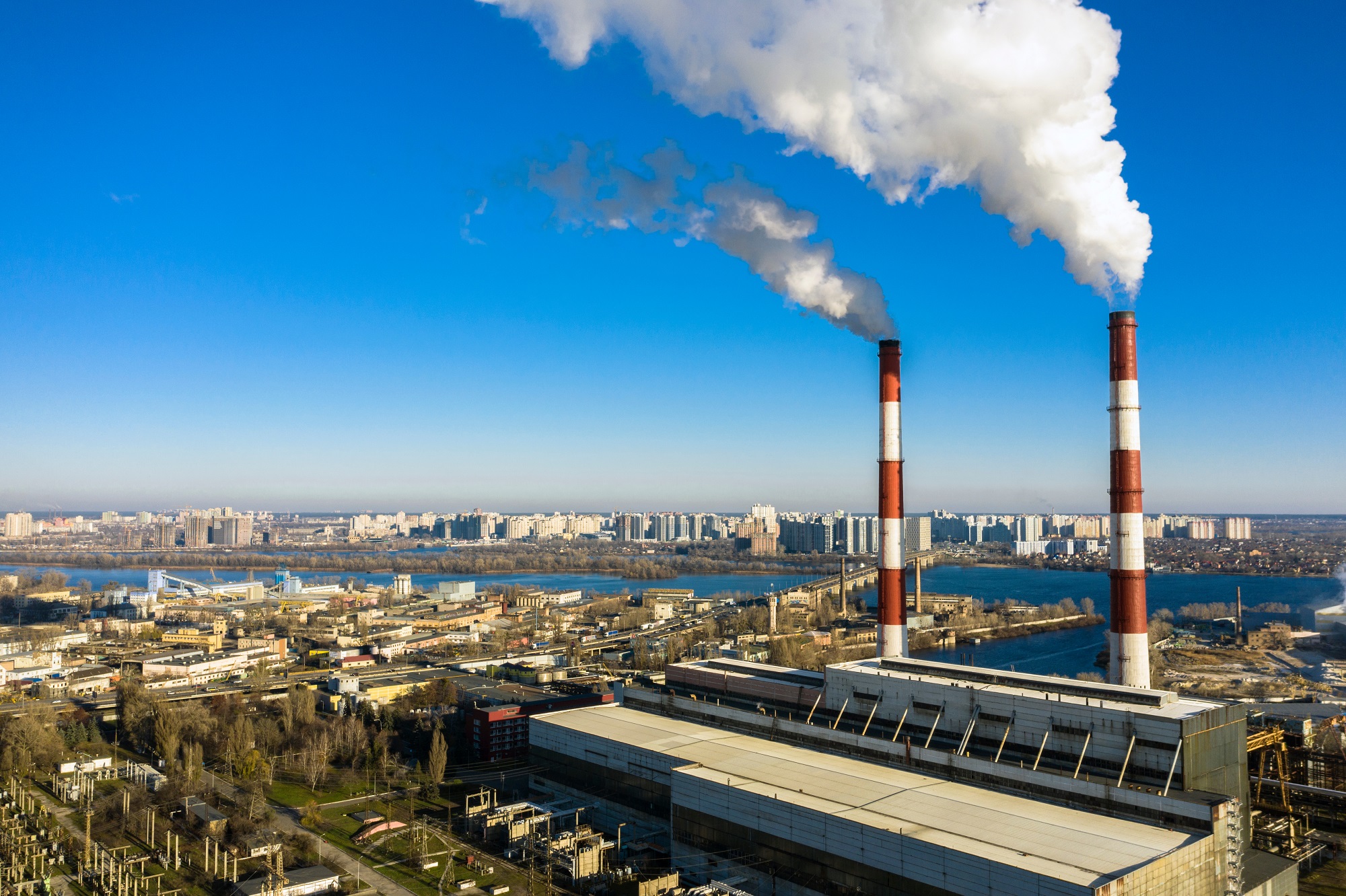
Compared to other topics in the sustainability realm, incineration rarely makes headlines in Canada, and that’s likely because it’s not widely used here. Less than 10% of our municipal waste ends up incinerated – far below other G7 nations, some of which incinerate more than half of their waste. Sweden even imports garbage from other nations to incinerate, and uses the energy to heat homes and power electricity needs.
Globally, incineration has been debated recently after a group of UK-based advocates called for an end and eventual ban on incineration in their country. With nearly half of all waste incinerated there, they claim it’s harming air quality far beyond what industry states, and that low income and ethnically diverse neighbourhoods are disproportionately feeling the impacts.
Here in Canada, the Toronto Environmental Alliance has taken a strong position against incineration, arguing that the purported benefits about its use for energy are flawed, in that it doesn’t address the problem of reducing overall waste. The Alliance says that waste sent for incineration shouldn’t be generated in the first place, and that it should be composted, recycled, or reused anyway, following circular economy strategies,
It’s true that compared to its G7 counterparts, Canada has relatively poor performance for waste diversion, recycling, and compost; we rely heavily on landfill, which is harmful to the environment in its own ways.
But is there a chance that incineration – even temporarily – can help us along the way to better diversion rates? A major factor to consider is that energy from incineration can be used elsewhere, and life cycle assessments can help quantify and compare the environmental trade-offs of different waste management approaches. It is also claimed that with modern technologies, we can better track and reduce its pollution or harmful effects.
Still, environmental advocates make the important point that, like most methods, incineration has drawbacks that can’t be ignored. While generating energy from waste involves burning materials that have a high energy content, such as dried organics and plastics, it is worth noting that these are actually materials that can and should be composted or recycled instead.
Amidst the debate, what’s clear is that incineration isn’t a perfect technology; even those who advocate for it point out that the emissions can still cause harm, though outcomes can be better than landfill or other forms of disposal. Regardless, there’s a good chance incineration may continue to expand, given the European Union’s recent directives for reducing and eventually eliminating landfill use.
Going forward, it’s a matter of clearing the air, literally and figuratively – so those on all sides can get a clearer picture of the right role for incineration.
 Originating from Barcelona, Laia’s educational journey led her to pursue secondary studies in the south of France. Her Bachelor’s degree in Economics and International Management allowed her to develop an analytical mindset. During her Master’s in International Business and Management, she engaged in numerous research study cases and actively participated in the creation of different business plans. This helped her develop an ability to critically analyze and address the strategic challenges that companies encounter.
 Andre has over 5 years of industry experience in project management, polymer and composite processing, materials characterization, and product development. He earned a Bachelor’s degree in Chemical Engineering from the Federal University of Santa Maria, Brazil, and a Ph.D. in Materials Science and Technology from the Federal University of Rio Grande do Sul, where he focused on Polymer and Composite materials. In 2012, he founded a design and manufacturing company specializing in biocomposites made with natural fibers, which he successfully sold in 2015.
 As an expert in sustainability, life cycle assessment, circular economy, and green chemistry, Nicolas possesses valuable skills and knowledge that can assist companies in developing and implementing sustainable and environmentally-friendly business models. They can achieve this by utilizing eco-friendly materials, improving manufacturing processes, reducing waste and hazardous chemical use, and advocating for the use of safer and more sustainable alternatives.
 Karan is an experienced professional who has worked in multiple geographies and roles along his career. He holds a total of 10+ years of experience in manufacturing operations, and has focused his efforts towards finding solutions for waste recovery and making recovery economical for industries.
  With several years of research experience in France and Canada, Fabien lends his expertise and passion for enzymology and microbiology to 5REDO’s sustainability innovation plans.
  With her significant hands-on experience in developing and characterizing biological and chemical systems, Vicky plays a key role in 5REDO’s efforts toward developing novel products and technologies that offer improved circularity and sustainability to the industry and society.
  As a recent graduate of chemical engineering from the University of Waterloo, Kyle brings his passion for impactful innovation and his experience with novel recycling processes to 5REDO to support our technology development initiatives.
  As our Senior Research Scientist, Hormoz draws on his eight years of industrial and nine years of academic research experience in the areas of polymer science and engineering to develop new solutions for advancing circularity and sustainability.
 Shauna is a freelance journalist that covers a wide range of topics, including health, education, the environment, travel, lifestyle trends, and more. She holds a Master of Journalism from Carleton University, and a Bachelor of Arts (Honours) in Global Development from Queen’s University.
 By leveraging her expertise in life cycle analysis and process engineering, Ophela helps 5REDO to take a holistic approach to the development of circular solutions and technologies.
  As the co-founder of 5REDO, Forough brings her expertise in supply chain management, business operations, inventory control, and revenue management to support the implementation of circular solutions within different industry sectors.
 With a passion for driving change and creating impact, Mahdi co-founded 5REDO to promote circular economy principles in Canada. He’s an alumnus of the 2021 Ellen MacArthur Foundation’s ‘From Linear to Circular Programme.’ Mahdi played a pivotal role in developing and managing the University of British Columbia’s (UBC) Circular Economy Seed Funding program, fostering partnerships between companies and academic researchers to co-create circular solutions.