

Many topics in the environmental and sustainability space can be polarizing, and incineration is one of the clearest examples.
On the industry side, experts say it’s an underused technology with great potential, but environmental advocates claim it’s nothing but harmful to air quality, the landscape, and nearby communities.
Compared to other topics in the sustainability realm, incineration rarely makes headlines in Canada, and that’s likely because it’s not widely used here. Less than 10% of our municipal waste ends up incinerated – far below other G7 nations, some of which incinerate more than half of their waste. Sweden even imports garbage from other nations to incinerate, and uses the energy to heat homes and power electricity needs.
Globally, incineration has been debated recently after a group of UK-based advocates called for an end and eventual ban on incineration in their country. With nearly half of all waste incinerated there, they claim it’s harming air quality far beyond what industry states, and that low income and ethnically diverse neighbourhoods are disproportionately feeling the impacts.
Here in Canada, the Toronto Environmental Alliance has taken a strong position against incineration, arguing that the purported benefits about its use for energy are flawed, in that it doesn’t address the problem of reducing overall waste. The Alliance says that waste sent for incineration shouldn’t be generated in the first place, and that it should be composted, recycled, or reused anyway, following circular economy strategies,
It’s true that compared to its G7 counterparts, Canada has relatively poor performance for waste diversion, recycling, and compost; we rely heavily on landfill, which is harmful to the environment in its own ways.
But is there a chance that incineration – even temporarily – can help us along the way to better diversion rates? A major factor to consider is that energy from incineration can be used elsewhere, and life cycle assessments can help quantify and compare the environmental trade-offs of different waste management approaches. It is also claimed that with modern technologies, we can better track and reduce its pollution or harmful effects.
Still, environmental advocates make the important point that, like most methods, incineration has drawbacks that can’t be ignored. While generating energy from waste involves burning materials that have a high energy content, such as dried organics and plastics, it is worth noting that these are actually materials that can and should be composted or recycled instead.
Amidst the debate, what’s clear is that incineration isn’t a perfect technology; even those who advocate for it point out that the emissions can still cause harm, though outcomes can be better than landfill or other forms of disposal. Regardless, there’s a good chance incineration may continue to expand, given the European Union’s recent directives for reducing and eventually eliminating landfill use.
Going forward, it’s a matter of clearing the air, literally and figuratively – so those on all sides can get a clearer picture of the right role for incineration.
 Originating from Barcelona, Laia’s educational journey led her to pursue secondary studies in the south of France. Her Bachelor’s degree in Economics and International Management allowed her to develop an analytical mindset. During her Master’s in International Business and Management, she engaged in numerous research study cases and actively participated in the creation of different business plans. This helped her develop an ability to critically analyze and address the strategic challenges that companies encounter.
 Andre has over 5 years of industry experience in project management, polymer and composite processing, materials characterization, and product development. He earned a Bachelor’s degree in Chemical Engineering from the Federal University of Santa Maria, Brazil, and a Ph.D. in Materials Science and Technology from the Federal University of Rio Grande do Sul, where he focused on Polymer and Composite materials. In 2012, he founded a design and manufacturing company specializing in biocomposites made with natural fibers, which he successfully sold in 2015.
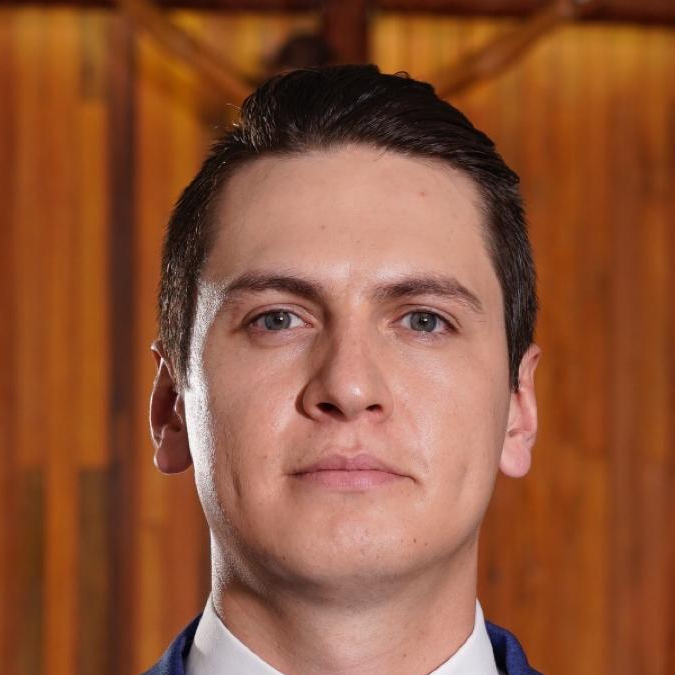 As an expert in sustainability, life cycle assessment, circular economy, and green chemistry, Nicolas possesses valuable skills and knowledge that can assist companies in developing and implementing sustainable and environmentally-friendly business models. They can achieve this by utilizing eco-friendly materials, improving manufacturing processes, reducing waste and hazardous chemical use, and advocating for the use of safer and more sustainable alternatives.
 Karan is an experienced professional who has worked in multiple geographies and roles along his career. He holds a total of 10+ years of experience in manufacturing operations, and has focused his efforts towards finding solutions for waste recovery and making recovery economical for industries.
  With several years of research experience in France and Canada, Fabien lends his expertise and passion for enzymology and microbiology to 5REDO’s sustainability innovation plans.
  With her significant hands-on experience in developing and characterizing biological and chemical systems, Vicky plays a key role in 5REDO’s efforts toward developing novel products and technologies that offer improved circularity and sustainability to the industry and society.
  As a recent graduate of chemical engineering from the University of Waterloo, Kyle brings his passion for impactful innovation and his experience with novel recycling processes to 5REDO to support our technology development initiatives.
  As our Senior Research Scientist, Hormoz draws on his eight years of industrial and nine years of academic research experience in the areas of polymer science and engineering to develop new solutions for advancing circularity and sustainability.
 Shauna is a freelance journalist that covers a wide range of topics, including health, education, the environment, travel, lifestyle trends, and more. She holds a Master of Journalism from Carleton University, and a Bachelor of Arts (Honours) in Global Development from Queen’s University.
 By leveraging her expertise in life cycle analysis and process engineering, Ophela helps 5REDO to take a holistic approach to the development of circular solutions and technologies.
  As the co-founder of 5REDO, Forough brings her expertise in supply chain management, business operations, inventory control, and revenue management to support the implementation of circular solutions within different industry sectors.
 With a passion for driving change and creating impact, Mahdi co-founded 5REDO to promote circular economy principles in Canada. He’s an alumnus of the 2021 Ellen MacArthur Foundation’s ‘From Linear to Circular Programme.’ Mahdi played a pivotal role in developing and managing the University of British Columbia’s (UBC) Circular Economy Seed Funding program, fostering partnerships between companies and academic researchers to co-create circular solutions.