

Partnerships of all kinds are common in the business world, and the average consumer encounters them more than they may realize.
Businesses often collaborate as a way to accelerate growth and profit, via creating new products or marketing to a wider audience. Think Marvel character toys included in kid’s meals at McDonald’s, or the luxury brand Balenciaga designing for fast-fashion chain H&M; these partnerships boost brand visibility and profits for both parties. In a collaboration, businesses can share resources, brand power, and marketing tools to make it mutually beneficial. Now, with more businesses looking toward Corporate Social Responsibility (CSR) and sustainability goals, there’s room for partnerships that could benefit the planet.
Integrating sustainable, circular practices takes time, and can require major shifts away from entrenched practices; think switching to new packaging for an entire product line, or revamping a formula with sustainable ingredients. This is where environmental (or ESG: environmental, social, and governance) partnerships can be helpful, as businesses can share expertise and resources to meet sustainability goals.
An ESG partnership can take many forms, from something concrete like sharing supply chain resources, or more abstract, through knowledge-sharing. An example of this is seen in the Canadian Roundtable for Sustainable Beef, established in 2014 between industry partners across the country. After widespread recognition of the steep environmental cost of beef cultivation, invested parties created a set of shared agreements to reduce the environmental impact of their practices.
The consulting firm Coro Strandberg names the many benefits to sustainability partnerships, including sharing risks, influencing larger policy, attracting funds, demonstrating leadership, and accelerating innovation. Indeed, many large corporations are hesitant or slow to change to sustainable practices because of the cost and risk involved, and the lack of large-scale innovation – finding a cost-effective and mass-produced source of sustainable packaging, for example, can be difficult and resource-intensive.
Another benefit of such partnerships is the opportunity to reduce greenwashing, which is when corporations overstate, exaggerate, or make false claims about their environmental actions. When a partnership involves multiple stakeholders, there are more audiences to be accountable to, and more layers of expertise at play. Of course, greenwashing can still be present, but when standards are agreed on, it’s less likely that the change will just be a flash in the pan. With the sharing of risks and assets, there’s more chance for it to last.
The benefit of having widespread industry standards also can’t be overlooked. Many corporations are multinational and have stakes, relationships and activities in multiple countries, so having a clear set of sustainability guidelines can have a global impact.
Right now, sustainable/ESG partnerships are still in their infancy, but they are growing in popularity. The MaRS Discovery District, a group in Canada focused on innovation and sustainability, details the many global partnerships currently at work, like the Marine Stewardship Council Certification for sustainable seafood, or the World Business Council for Sustainable Development. These partnerships, and many others, leave the door open for concrete action that will make sustainability an achievable goal.
At 5REDO, helping innovators meet their sustainability goals is one of our core activities. We are always open to partnering with companies and organizations to craft and execute sustainability initiatives. Together, we can work to discover solutions, build innovations, and move toward a more sustainable future.
 Originating from Barcelona, Laia’s educational journey led her to pursue secondary studies in the south of France. Her Bachelor’s degree in Economics and International Management allowed her to develop an analytical mindset. During her Master’s in International Business and Management, she engaged in numerous research study cases and actively participated in the creation of different business plans. This helped her develop an ability to critically analyze and address the strategic challenges that companies encounter.
 Andre has over 5 years of industry experience in project management, polymer and composite processing, materials characterization, and product development. He earned a Bachelor’s degree in Chemical Engineering from the Federal University of Santa Maria, Brazil, and a Ph.D. in Materials Science and Technology from the Federal University of Rio Grande do Sul, where he focused on Polymer and Composite materials. In 2012, he founded a design and manufacturing company specializing in biocomposites made with natural fibers, which he successfully sold in 2015.
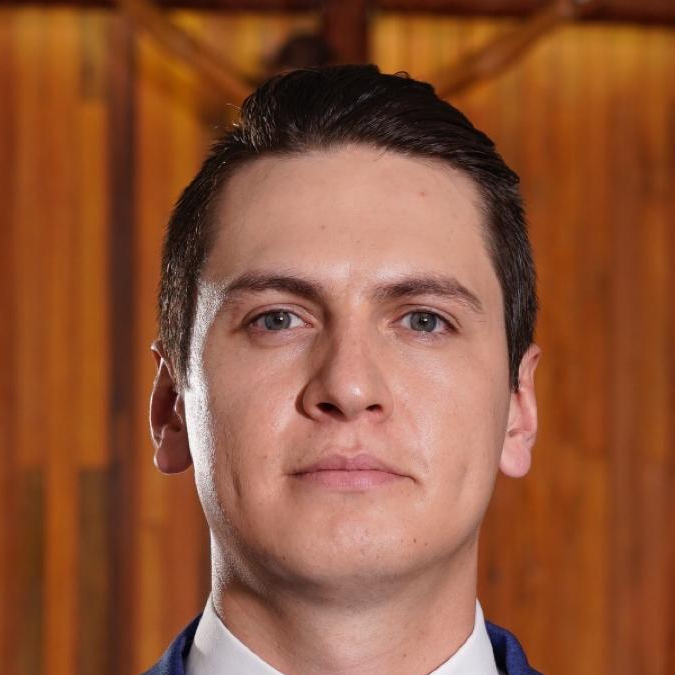 As an expert in sustainability, life cycle assessment, circular economy, and green chemistry, Nicolas possesses valuable skills and knowledge that can assist companies in developing and implementing sustainable and environmentally-friendly business models. They can achieve this by utilizing eco-friendly materials, improving manufacturing processes, reducing waste and hazardous chemical use, and advocating for the use of safer and more sustainable alternatives.
 Karan is an experienced professional who has worked in multiple geographies and roles along his career. He holds a total of 10+ years of experience in manufacturing operations, and has focused his efforts towards finding solutions for waste recovery and making recovery economical for industries.
  With several years of research experience in France and Canada, Fabien lends his expertise and passion for enzymology and microbiology to 5REDO’s sustainability innovation plans.
  With her significant hands-on experience in developing and characterizing biological and chemical systems, Vicky plays a key role in 5REDO’s efforts toward developing novel products and technologies that offer improved circularity and sustainability to the industry and society.
  As a recent graduate of chemical engineering from the University of Waterloo, Kyle brings his passion for impactful innovation and his experience with novel recycling processes to 5REDO to support our technology development initiatives.
  As our Senior Research Scientist, Hormoz draws on his eight years of industrial and nine years of academic research experience in the areas of polymer science and engineering to develop new solutions for advancing circularity and sustainability.
 Shauna is a freelance journalist that covers a wide range of topics, including health, education, the environment, travel, lifestyle trends, and more. She holds a Master of Journalism from Carleton University, and a Bachelor of Arts (Honours) in Global Development from Queen’s University.
 By leveraging her expertise in life cycle analysis and process engineering, Ophela helps 5REDO to take a holistic approach to the development of circular solutions and technologies.
  As the co-founder of 5REDO, Forough brings her expertise in supply chain management, business operations, inventory control, and revenue management to support the implementation of circular solutions within different industry sectors.
 With a passion for driving change and creating impact, Mahdi co-founded 5REDO to promote circular economy principles in Canada. He’s an alumnus of the 2021 Ellen MacArthur Foundation’s ‘From Linear to Circular Programme.’ Mahdi played a pivotal role in developing and managing the University of British Columbia’s (UBC) Circular Economy Seed Funding program, fostering partnerships between companies and academic researchers to co-create circular solutions.