

The electric vehicle market has grown rapidly in the past 10 years; sales were negligible before 2010 and have increased to over 2 million vehicles in 2019, bringing the total stock of electric cars to 7.2 million globally. This level of production, which demands 200,000 tonnes of lithium-ion battery cathode material annually, along with the high number of batteries that will be retired in near future have created a growing interest among automakers and entrepreneurs to develop a range of end-of-life scenarios for spent battery packs, including the recovery of materials from used battery cells, in particular high-value and energy-intensive cathode materials such as nickel and cobalt.
In December 2020, the US Department of Energy announced the seven winners of Phase II of its Lithium-Ion Battery Recycling Prize. The goal of this competition is to develop and demonstrate processes that, when scaled, can capture 90% of all end-of-life lithium-ion batteries in the US, and re-introduce key materials back into the supply chain. Here, we provide an overview of some of the winning companies who are leading the innovation in technology and operations for large-scale battery recycling in the US.
Li Industries: This startup company is focusing on two innovative solutions to facilitate battery recycling. Its Smart Battery Sorting uses sensors to detect physical and chemical features of the battery which is fed into an AI-based software to guide the sorting of the batteries. The company’s second innovation is Direct Lithium-ion Battery Recycling that regenerates commercial-grade cathode materials using recovered materials from spent battery packs. While details have not been provided on the company’s website, the regeneration process most probably relies on materials recovery in a mixture form rather than individual metals. This approach takes advantage of the limited battery chemistries of electric vehicles to reproduce known cathode materials.
OnTo Technologies: The company has developed a suite of technologies for recycling of Li-ion batteries. Among those is the Cathode-Healing technology that directly recovers clean cathode particles from used batteries. The company also uses a patented technology to recover cathode in the precursor form.
Renewance: As a provider of software solutions and consultancy services, this company is focused on the management of battery assets to help companies find economically viable and regulatory compliant solutions for recycling and reusing of their batteries. The company’s Renewance Connect is a digital platform to manage the full life cycle of industrial batteries.
Titan Advanced Energy solutions: The solution offered by this company supports the reuse of Li-ion batteries rather than their recycling. When these batteries reach to a state that cannot meet the standard requirements of electric vehicles, they can still be useful for other applications, such as stationary storage. However, understanding the second life potential of the batteries requires a fast and inexpensive method to determine the battery’s state of health. The company has developed an ultrasound-based system to measure the health condition of a battery within a few seconds at a high level of accuracy.
The above innovations and many others that are happening across the globe are facilitating the development of a circular economy for electric vehicles. As these vehicles are rapidly becoming commonplace, early planning on the life cycle management of their components is critical to mitigate any environmental risks and to support materials sustainability. Life cycle assessment of battery recycling technologies can help identify which innovations offer the greatest environmental benefits when deployed at scale.
 Originating from Barcelona, Laia’s educational journey led her to pursue secondary studies in the south of France. Her Bachelor’s degree in Economics and International Management allowed her to develop an analytical mindset. During her Master’s in International Business and Management, she engaged in numerous research study cases and actively participated in the creation of different business plans. This helped her develop an ability to critically analyze and address the strategic challenges that companies encounter.
 Andre has over 5 years of industry experience in project management, polymer and composite processing, materials characterization, and product development. He earned a Bachelor’s degree in Chemical Engineering from the Federal University of Santa Maria, Brazil, and a Ph.D. in Materials Science and Technology from the Federal University of Rio Grande do Sul, where he focused on Polymer and Composite materials. In 2012, he founded a design and manufacturing company specializing in biocomposites made with natural fibers, which he successfully sold in 2015.
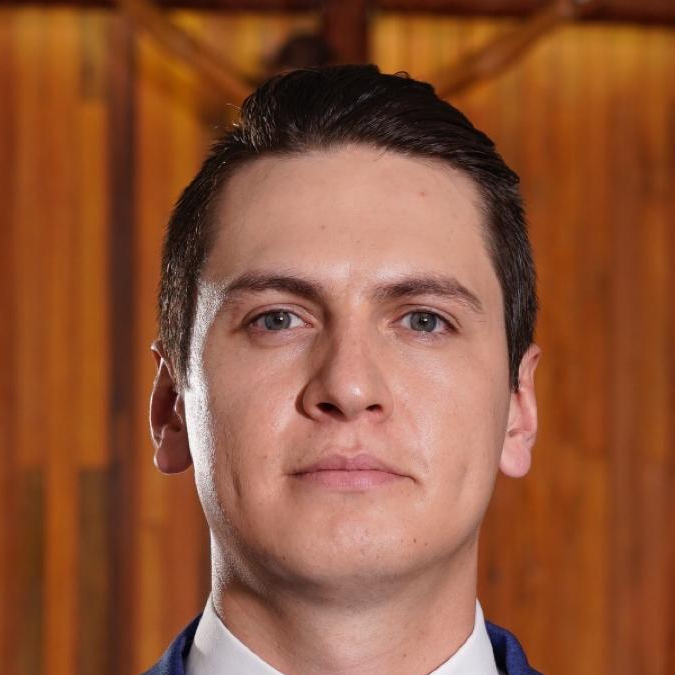 As an expert in sustainability, life cycle assessment, circular economy, and green chemistry, Nicolas possesses valuable skills and knowledge that can assist companies in developing and implementing sustainable and environmentally-friendly business models. They can achieve this by utilizing eco-friendly materials, improving manufacturing processes, reducing waste and hazardous chemical use, and advocating for the use of safer and more sustainable alternatives.
 Karan is an experienced professional who has worked in multiple geographies and roles along his career. He holds a total of 10+ years of experience in manufacturing operations, and has focused his efforts towards finding solutions for waste recovery and making recovery economical for industries.
  With several years of research experience in France and Canada, Fabien lends his expertise and passion for enzymology and microbiology to 5REDO’s sustainability innovation plans.
  With her significant hands-on experience in developing and characterizing biological and chemical systems, Vicky plays a key role in 5REDO’s efforts toward developing novel products and technologies that offer improved circularity and sustainability to the industry and society.
  As a recent graduate of chemical engineering from the University of Waterloo, Kyle brings his passion for impactful innovation and his experience with novel recycling processes to 5REDO to support our technology development initiatives.
  As our Senior Research Scientist, Hormoz draws on his eight years of industrial and nine years of academic research experience in the areas of polymer science and engineering to develop new solutions for advancing circularity and sustainability.
 Shauna is a freelance journalist that covers a wide range of topics, including health, education, the environment, travel, lifestyle trends, and more. She holds a Master of Journalism from Carleton University, and a Bachelor of Arts (Honours) in Global Development from Queen’s University.
 By leveraging her expertise in life cycle analysis and process engineering, Ophela helps 5REDO to take a holistic approach to the development of circular solutions and technologies.
  As the co-founder of 5REDO, Forough brings her expertise in supply chain management, business operations, inventory control, and revenue management to support the implementation of circular solutions within different industry sectors.
 With a passion for driving change and creating impact, Mahdi co-founded 5REDO to promote circular economy principles in Canada. He’s an alumnus of the 2021 Ellen MacArthur Foundation’s ‘From Linear to Circular Programme.’ Mahdi played a pivotal role in developing and managing the University of British Columbia’s (UBC) Circular Economy Seed Funding program, fostering partnerships between companies and academic researchers to co-create circular solutions.