

The field of behavioural science can seem elusive, but most of us encounter it often, whether we know it or not. From advertising slogans to labels on garbage bins, its impacts are everywhere. This area of social science deals – as you might expect – with human behaviour: how it works, why, and what interventions can influence it.
It’s also of particular interest in the environmental space, especially since the revelation that much of climate change is caused by human behaviour. Experts in the climate change and circular economy realm often use behavioural science to determine what interventions will push us toward more sustainable behaviour. It’s a worthwhile endeavour, since data has shown behaviour can indeed be influenced with a targeted approach; recycling and waste management offers a good example.
Any change or improvement in a waste collection system, like adding a new bin or reducing contamination, should come with education that considers current consumer behaviour. An article from Circular details how cities in the UK have done so successfully, with actions as simple as adding bottle-shaped receptacles to public collection bins, or showing a physical display of daily waste collected in busy areas. These interventions were enacted to reduce recycling contamination, a problem that had stymied local infrastructure for some time. Since recycling programs had already been in place for decades, experts found that messaging had to shift from just telling people to recycle, to educating them – with a positive, action-oriented tone – about the impacts of contamination.
This was achieved through both information campaigns, and what’s called “nudging”. An article from the journal on Resources, Conservation and Recycling, defines nudging as something that “helps people without compulsion, but ‘paternalizes’ them with a gentle push towards the ‘right choice’”. The authors noted it’s come to be seen as “a low-cost solution for promoting pro-environmental behaviour” (the bottle-shaped receptacles are one example).
Whether it’s in government policy or an ad campaign, behavioural science is powerful. Take smoking, for example; not so long ago, tobacco companies and medical professionals alike glossed over the risks because of strong public uptake – smoking was socially condoned. When evidence of its harms became widely known, a sea change took place. Now, a mix of public-private initiatives, like strict bans on smoking areas and images of damaged lungs on cigarette packaging tell a completely different story. It’s one that directly impacted human behaviour; nearly half of all American adults smoked in 1965, and in 2018, only about 13% did.
Though the context is different, if this could happen for smoking, why not for environmental behaviours? Some may argue there have already been years of large-scale efforts to get people to participate in more sustainable actions, to little effect. But the difference now, as one expert in the Circular piece stated, is the private sector is on board in a more significant way: “Brands talk to citizens in a very different way from local authorities. That different voice is a powerful addition.”
So, how does behavioural science relate back to the circular economy? Well, a truly circular economy needs active participation from everyday consumers, private companies, and public authorities; a diverse set of actors that could benefit from thoughtful, cohesive information and initiatives. As we know from recycling examples, a circular waste management system only works if users fully participate, and they can only do so with knowledge of (and sometimes guidance toward) best practices. By using a behavioural science lens, everyone – from big decision makers to an average household – can be empowered to take the right steps.
 Originating from Barcelona, Laia’s educational journey led her to pursue secondary studies in the south of France. Her Bachelor’s degree in Economics and International Management allowed her to develop an analytical mindset. During her Master’s in International Business and Management, she engaged in numerous research study cases and actively participated in the creation of different business plans. This helped her develop an ability to critically analyze and address the strategic challenges that companies encounter.
 Andre has over 5 years of industry experience in project management, polymer and composite processing, materials characterization, and product development. He earned a Bachelor’s degree in Chemical Engineering from the Federal University of Santa Maria, Brazil, and a Ph.D. in Materials Science and Technology from the Federal University of Rio Grande do Sul, where he focused on Polymer and Composite materials. In 2012, he founded a design and manufacturing company specializing in biocomposites made with natural fibers, which he successfully sold in 2015.
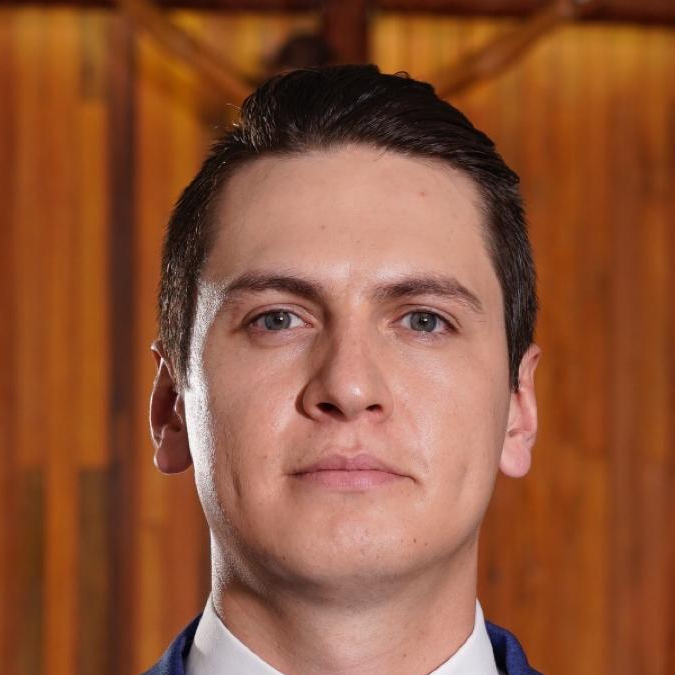 As an expert in sustainability, life cycle assessment, circular economy, and green chemistry, Nicolas possesses valuable skills and knowledge that can assist companies in developing and implementing sustainable and environmentally-friendly business models. They can achieve this by utilizing eco-friendly materials, improving manufacturing processes, reducing waste and hazardous chemical use, and advocating for the use of safer and more sustainable alternatives.
 Karan is an experienced professional who has worked in multiple geographies and roles along his career. He holds a total of 10+ years of experience in manufacturing operations, and has focused his efforts towards finding solutions for waste recovery and making recovery economical for industries.
  With several years of research experience in France and Canada, Fabien lends his expertise and passion for enzymology and microbiology to 5REDO’s sustainability innovation plans.
  With her significant hands-on experience in developing and characterizing biological and chemical systems, Vicky plays a key role in 5REDO’s efforts toward developing novel products and technologies that offer improved circularity and sustainability to the industry and society.
  As a recent graduate of chemical engineering from the University of Waterloo, Kyle brings his passion for impactful innovation and his experience with novel recycling processes to 5REDO to support our technology development initiatives.
  As our Senior Research Scientist, Hormoz draws on his eight years of industrial and nine years of academic research experience in the areas of polymer science and engineering to develop new solutions for advancing circularity and sustainability.
 Shauna is a freelance journalist that covers a wide range of topics, including health, education, the environment, travel, lifestyle trends, and more. She holds a Master of Journalism from Carleton University, and a Bachelor of Arts (Honours) in Global Development from Queen’s University.
 By leveraging her expertise in life cycle analysis and process engineering, Ophela helps 5REDO to take a holistic approach to the development of circular solutions and technologies.
  As the co-founder of 5REDO, Forough brings her expertise in supply chain management, business operations, inventory control, and revenue management to support the implementation of circular solutions within different industry sectors.
 With a passion for driving change and creating impact, Mahdi co-founded 5REDO to promote circular economy principles in Canada. He’s an alumnus of the 2021 Ellen MacArthur Foundation’s ‘From Linear to Circular Programme.’ Mahdi played a pivotal role in developing and managing the University of British Columbia’s (UBC) Circular Economy Seed Funding program, fostering partnerships between companies and academic researchers to co-create circular solutions.