

In a matter of decades, digital technology has transformed how we live, work, and communicate. More than that, widespread digitalization is a critical piece in the transition to a circular economy, in ways both big and small. From sending electronic receipts to streamlining global supply chains, digitalization is a frontier waiting to be further harnessed.
At first, the two concepts may seem unrelated; we often think of the digital world as making our lives more interconnected and convenient, but not necessarily more sustainable. In truth, even the simple ability to access quality information – and quickly share it – can push sustainable innovation further than we think.
The OECD (Organisation for Economic Co-operation and Development) has published extensive work on this, stating that various digital technologies, “facilitate the transition to a more resource-efficient and circular economy, by helping to overcome obstacles that stand in the way of the large-scale deployment of greener business models, as well as a more effective delivery of circular economy policies.” The OECD points to things like artificial intelligence, data analytics, and even 3-D printing as being important tools in transitioning from resource-intensive, wasteful production.
Put simply, the digital world gives us better access to information, and the tools to implement that information in a more efficient manner. In the face of the climate crisis, that’s essential.
One of the main sites of change lies in making supply chains more circular, something we’re always thinking about at 5REDO. An article from the tech site Technology Review outlines the ways digitalization can help to, “capture, store, and analyze consumption patterns, which in turn helps organizations make better decisions.” They provide the example of material use, which in most sectors, generates about 70% of greenhouse gas emissions (GHG): “If businesses have insights into how full their aircraft, ship, or truck is, they can determine in real time how efficient their delivery will be. This translates to better efficiency, lower fuel costs, shorter delivery cycles, and reduced GHG.”
With the advanced technology available for data analytics and visualization, companies, governments, and organizations are able to test new models and examine risks in a virtual setting. In the pre-digital era, introducing a new idea or product would require labour and resource-intensive work – and cause more waste. Now, employing sustainable principles can be done in a measured, efficient, and arguably more profitable way. After all, the same digital tools have helped researchers measure and project for climate change – and it’s where solutions can come from, too. An article from the World Economic Forum says it best: “Without a coherent and inclusive global digitalization effort, we will never be able to achieve climate goals in a timely manner.”
As with other climate change efforts, we have to act now. The consulting agency Deloitte has said there’s a “window of opportunity” to implement the benefits of digitalization, describing it as a “major opportunity for individual companies to re-think their future, their strategy, their value chain, their value creation, and their operations.”
With all of this considered, we see that there’s much more to the digital world than everyday convenience. A 3-D printer isn’t just a cool gadget; it can radically change global resource use. An open data-sharing platform isn’t just there to help employees communicate; it can be a site for critical sustainability research. Ultimately, it’s important to foster a mindset shift, so we think of digitalization as a foundational tool for social, economic, and environmental change.
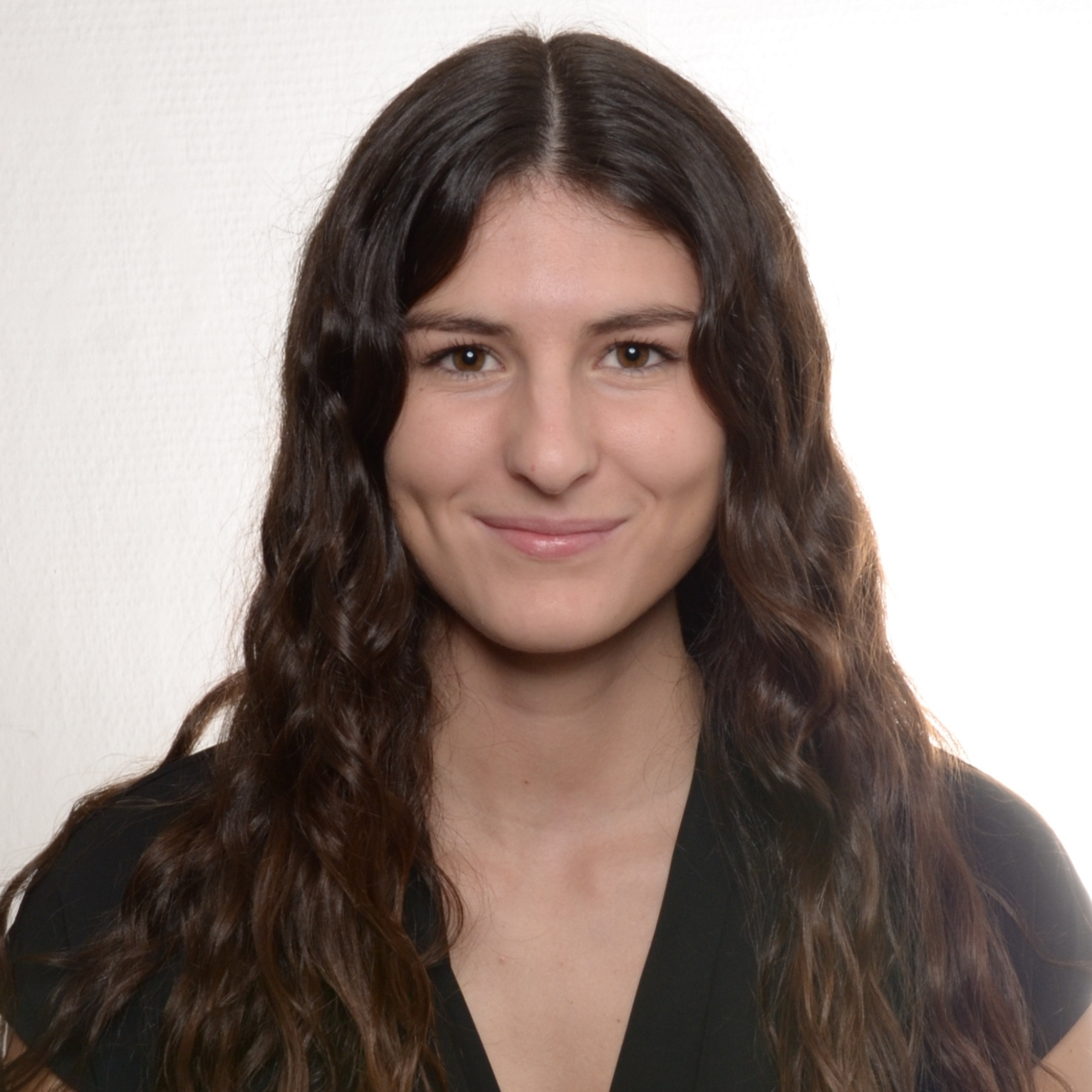 Originating from Barcelona, Laia’s educational journey led her to pursue secondary studies in the south of France. Her Bachelor’s degree in Economics and International Management allowed her to develop an analytical mindset. During her Master’s in International Business and Management, she engaged in numerous research study cases and actively participated in the creation of different business plans. This helped her develop an ability to critically analyze and address the strategic challenges that companies encounter.
 Andre has over 5 years of industry experience in project management, polymer and composite processing, materials characterization, and product development. He earned a Bachelor’s degree in Chemical Engineering from the Federal University of Santa Maria, Brazil, and a Ph.D. in Materials Science and Technology from the Federal University of Rio Grande do Sul, where he focused on Polymer and Composite materials. In 2012, he founded a design and manufacturing company specializing in biocomposites made with natural fibers, which he successfully sold in 2015.
 As an expert in sustainability, life cycle assessment, circular economy, and green chemistry, Nicolas possesses valuable skills and knowledge that can assist companies in developing and implementing sustainable and environmentally-friendly business models. They can achieve this by utilizing eco-friendly materials, improving manufacturing processes, reducing waste and hazardous chemical use, and advocating for the use of safer and more sustainable alternatives.
 Karan is an experienced professional who has worked in multiple geographies and roles along his career. He holds a total of 10+ years of experience in manufacturing operations, and has focused his efforts towards finding solutions for waste recovery and making recovery economical for industries.
  With several years of research experience in France and Canada, Fabien lends his expertise and passion for enzymology and microbiology to 5REDO’s sustainability innovation plans.
  With her significant hands-on experience in developing and characterizing biological and chemical systems, Vicky plays a key role in 5REDO’s efforts toward developing novel products and technologies that offer improved circularity and sustainability to the industry and society.
  As a recent graduate of chemical engineering from the University of Waterloo, Kyle brings his passion for impactful innovation and his experience with novel recycling processes to 5REDO to support our technology development initiatives.
  As our Senior Research Scientist, Hormoz draws on his eight years of industrial and nine years of academic research experience in the areas of polymer science and engineering to develop new solutions for advancing circularity and sustainability.
 Shauna is a freelance journalist that covers a wide range of topics, including health, education, the environment, travel, lifestyle trends, and more. She holds a Master of Journalism from Carleton University, and a Bachelor of Arts (Honours) in Global Development from Queen’s University.
 By leveraging her expertise in life cycle analysis and process engineering, Ophela helps 5REDO to take a holistic approach to the development of circular solutions and technologies.
  As the co-founder of 5REDO, Forough brings her expertise in supply chain management, business operations, inventory control, and revenue management to support the implementation of circular solutions within different industry sectors.
 With a passion for driving change and creating impact, Mahdi co-founded 5REDO to promote circular economy principles in Canada. He’s an alumnus of the 2021 Ellen MacArthur Foundation’s ‘From Linear to Circular Programme.’ Mahdi played a pivotal role in developing and managing the University of British Columbia’s (UBC) Circular Economy Seed Funding program, fostering partnerships between companies and academic researchers to co-create circular solutions.