


Life Cycle Assessment of a Plant-Based Meat Alternative
In this project, we conducted a comprehensive cradle-to-gate life cycle assessment (LCA) to evaluate the emissions and environmental impacts of all material and energy flows involved in the production of a plant-based meat alternative. This included a hotspot analysis to identify the stages in the production process with the highest environmental impact. We also compared the plant-based product with traditional meat production to highlight environmental benefits. Additionally, we provided recommendations to our client for further minimizing the environmental impacts of the meat alternative.
Main Deliverable: An LCA report compliant to ISO 14044.


Production of Microparticles for a Polymer Additive Application
In this project, we supported the development of a bio-based additive aimed for enhancing the properties of polymers. Micronization of the additive presented a technical challenge. We explored various strategies, including ball milling, emulsification, and spray drying, to prepare micron-sized additives. Experiments were designed to optimize both the particles formulation and the micronizing process to increase the yield of microparticles and their respective functionality.
Main Deliverable: Protocols for optimal formulation and micronization of a polymer additive.

Experimental Evaluation of Bio-Based Coatings for Personal Protective Equipment
In this project, we evaluated the performance of various commercial bio-based coatings for personal protective equipment (PPE). The aim was to enhance wearer comfort. Both qualitative assessments, focused on feeling and comfort, and quantitative assessments, focused on durability, were conducted for each coating material.
Main Deliverable: Pros and cons of each bio-based coating based on our test results and observations.

Biodegradation Testing of a Novel Elastomeric Material
In this project, we characterized the biodegradation of a new rubber formulation. Rubber films were prepared and tested in organic waste and mature compost at 58°C, following ISO 20200 and ASTM D5338 standards. The results of these tests assisted the product development team in optimizing the rubber formulation to enhance its biodegradability.
Main Deliverable: Biodegradation percentage of rubber films after 1 month of incubation.

Environmental Impact Assessment of Plastic Waste Management Scenarios in British Columbia
In this project, we used the life cycle assessment (LCA) methodology to evaluate the environmental impact of two alternative scenarios to the As-Is scenario for managing plastic waste in the province of British Columbia in Canada. Our LCA study encompassed all types of plastics commonly encountered in a waste mix and considered five potential end-of-life fates: mechanical recycling, incineration, chemical recycling, landfill, and unmanaged dumps. The environmental impact assessment was been limited to end-of-life treatment processes to enhance its relevance to regional actions. The study offers some guidance to policymakers on strategies for fostering more sustainable management of plastic waste.
Main Deliverable: A publication in a technical journal.

Design and Testing of a Bio-Based Coating for Paper
In this project, we conducted a proof-of-concept study for our client to assess the feasibility of using their biopolymer as a coating for food-contact papers. Our team synthesized various formulations of the coating precursors and evaluated the performance of the coated papers in terms of grease resistance, water absorption capacity, and mechanical properties.
Main Deliverable: Protocols for preparing different paper coating precursors with the biopolymer, along with the pros and cons of each precursor type.
Survey Study: Effects of Situational Factors on Plastic Recycling Behavior
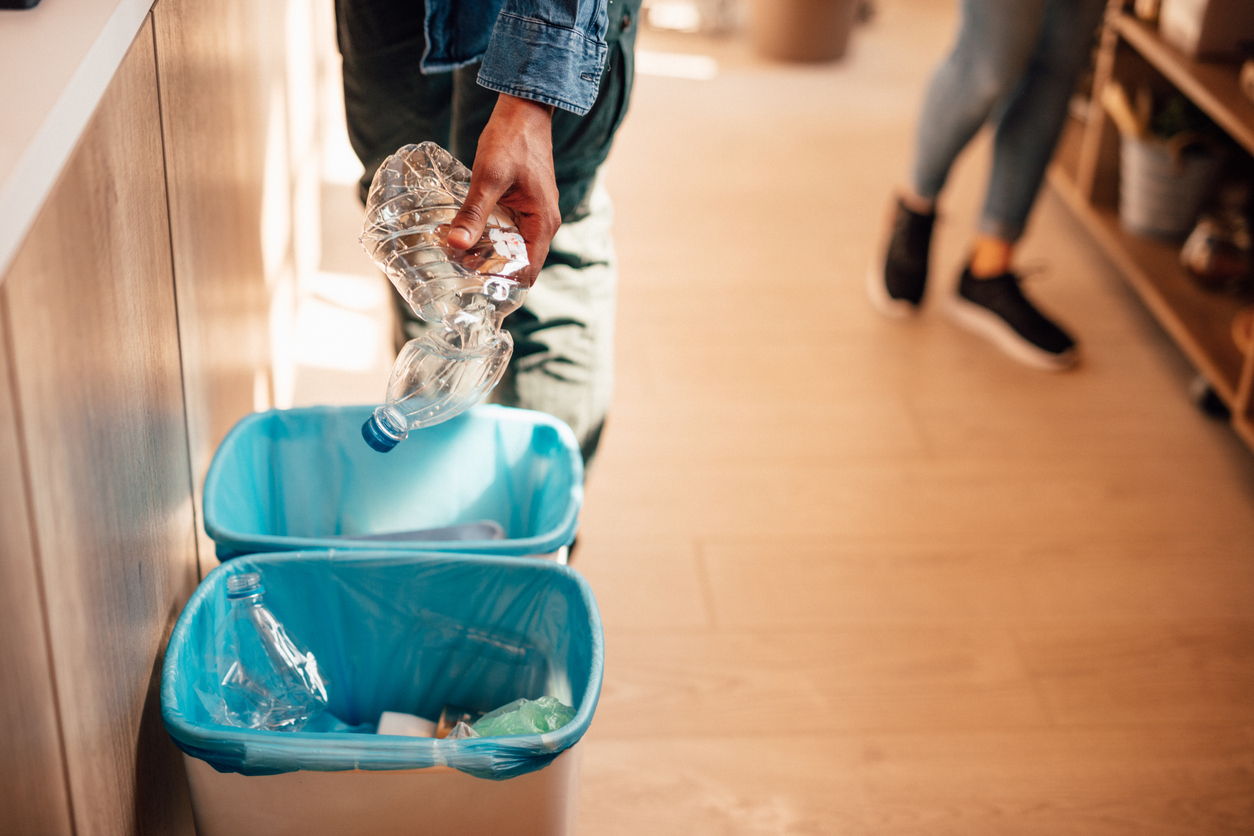
In collaboration with the University of Quebec at Chicoutimi (UQAC), we conducted a survey study exploring how situational factors such as cost, time, and effort impact plastic packaging waste recycling behavior. The study also examined the mediating role of environmental attitudes in this relationship. Environmental attitudes were assessed based on respondents' care for the environment, concern about global warming and climate change, intention to monitor recycling behavior, and trust in others' recycling habits. An online questionnaire was administered to a pan-Canadian sample of 1,000 respondents. The study offers suggestions for improving actions and policies to encourage recycling behavior.
Main Deliverable: A publication in a technical journal.

Analyzing Waste Management Practices for Medical Gloves
In this project, we assessed the use and disposal practices of examination gloves in the dental and medical sectors across three Canadian cities. We conducted 83 semi-structured qualitative interviews with healthcare professionals to explore their attitudes toward alternative glove solutions. Additionally, we analyzed both quantitative and qualitative data to identify trends, patterns, and correlations in waste management practices.
Main Deliverable: Market study report with data-driven insights
Improving the Stability of Enzymes for Waste Treatment Applications
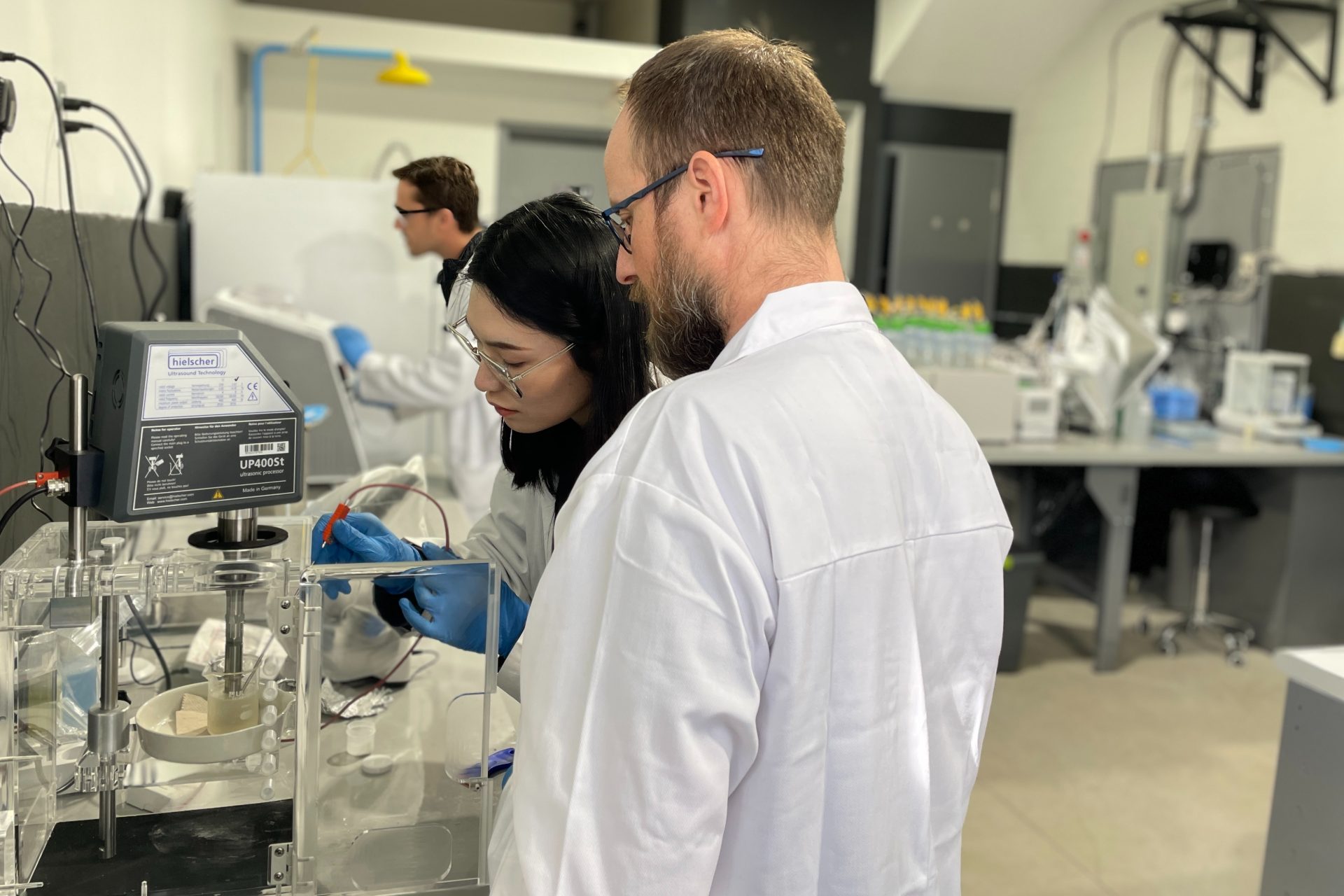
In this project, we evaluated different immobilization strategies to enhance the thermal stability of enzymes for plastic waste treatment applications. Enzyme activity tests were conducted to assess the viability of enzymes throughout the enzymatic treatment process. The results guided the development team in modifying the formulation and production process for stabilizing enzymes.
Main Deliverable: Protocols for stabilizing enzymes, along with pros and cons of each method based on our test results and trial studies.

Life Cycle Assessment of Rubber Gloves Production and Disposal
In this project, we conducted a comprehensive cradle-to-grave life cycle assessment (LCA) of rubber gloves to evaluate their environmental impact from production to disposal. This analysis involved exploring various scenarios, including different production methods, material choices, and disposal options. By examining these scenarios, we identified key areas where environmental impacts could be minimized and provided actionable recommendations to the product development team for improving the sustainability of rubber gloves.
Main Deliverable: An LCA report compliant to ISO 14067: Carbon Footprint of Products.
 Originating from Barcelona, Laia’s educational journey led her to pursue secondary studies in the south of France. Her Bachelor’s degree in Economics and International Management allowed her to develop an analytical mindset. During her Master’s in International Business and Management, she engaged in numerous research study cases and actively participated in the creation of different business plans. This helped her develop an ability to critically analyze and address the strategic challenges that companies encounter.
 Andre has over 5 years of industry experience in project management, polymer and composite processing, materials characterization, and product development. He earned a Bachelor’s degree in Chemical Engineering from the Federal University of Santa Maria, Brazil, and a Ph.D. in Materials Science and Technology from the Federal University of Rio Grande do Sul, where he focused on Polymer and Composite materials. In 2012, he founded a design and manufacturing company specializing in biocomposites made with natural fibers, which he successfully sold in 2015.
 As an expert in sustainability, life cycle assessment, circular economy, and green chemistry, Nicolas possesses valuable skills and knowledge that can assist companies in developing and implementing sustainable and environmentally-friendly business models. They can achieve this by utilizing eco-friendly materials, improving manufacturing processes, reducing waste and hazardous chemical use, and advocating for the use of safer and more sustainable alternatives.
 Karan is an experienced professional who has worked in multiple geographies and roles along his career. He holds a total of 10+ years of experience in manufacturing operations, and has focused his efforts towards finding solutions for waste recovery and making recovery economical for industries.
  With several years of research experience in France and Canada, Fabien lends his expertise and passion for enzymology and microbiology to 5REDO’s sustainability innovation plans.
  With her significant hands-on experience in developing and characterizing biological and chemical systems, Vicky plays a key role in 5REDO’s efforts toward developing novel products and technologies that offer improved circularity and sustainability to the industry and society.
  As a recent graduate of chemical engineering from the University of Waterloo, Kyle brings his passion for impactful innovation and his experience with novel recycling processes to 5REDO to support our technology development initiatives.
  As our Senior Research Scientist, Hormoz draws on his eight years of industrial and nine years of academic research experience in the areas of polymer science and engineering to develop new solutions for advancing circularity and sustainability.
 Shauna is a freelance journalist that covers a wide range of topics, including health, education, the environment, travel, lifestyle trends, and more. She holds a Master of Journalism from Carleton University, and a Bachelor of Arts (Honours) in Global Development from Queen’s University.
 By leveraging her expertise in life cycle analysis and process engineering, Ophela helps 5REDO to take a holistic approach to the development of circular solutions and technologies.
  As the co-founder of 5REDO, Forough brings her expertise in supply chain management, business operations, inventory control, and revenue management to support the implementation of circular solutions within different industry sectors.
 With a passion for driving change and creating impact, Mahdi co-founded 5REDO to promote circular economy principles in Canada. He’s an alumnus of the 2021 Ellen MacArthur Foundation’s ‘From Linear to Circular Programme.’ Mahdi played a pivotal role in developing and managing the University of British Columbia’s (UBC) Circular Economy Seed Funding program, fostering partnerships between companies and academic researchers to co-create circular solutions.