

“Cat Reman restores parts at the end their lives to like-new condition, providing you with a cost-effective alternative solution to new Cat parts.” This is how the construction machinery and equipment company Caterpillar is attempting to convince its customers about the quality of the parts and components that get a second chance of life through the company’s remanufacturing exchange system. Like Caterpillar, many other companies who have initiated remanufacturing programs are emphasizing on the “like-new” condition of their products besides their environmental benefits to pave the way for their adoption in the market.
As a circular economy strategy and a tendency for future manufacturing, remanufacturing can be regarded as an environmentally favorable end-of-life treatment method during which a product is rebuilt to the quality of the original manufactured product using a combination of reused, repaired and new parts. Remanufacturing can offer much greater energy reduction and materials conservation, and has therefore being encouraged through the circular economy framework.
Remanufacturing involves a series of processes such as disassembly, cleaning, inspection, recondition, reassembly, test and packing. Among these, cleaning processes play critical roles and must be executed at different stages along the entire remanufacturing procedure. The cleaning process typically gets rid of paint, carbon deposit, grease, rust on the surface of used components. It is not only important for the physical appearance of the final product, but more importantly facilitates the examining of the wear pattern and microcracks and determining the remanufacturability of parts.
Cleaning technologies are usually not used alone but in succession based on material, complexity, and accessibility of parts. For example, a typical remanufacturing facility combines two conventional methods of high temperature decomposition and shot blasting: firstly, organic chemicals on recovered parts get evaporated and decomposed by heat, and secondly, solid residues on surfaces are eliminated by blasting with hard beads. The removed waste residues after cleaning are typically disposed in the landfill. In an advanced cleaning system, a supercritical fluid (SCF), commonly supercritical CO2, is used to remove contaminants. SCF is a substance with intermediate state between liquid and gas whose low surface tension makes it a good solvent that can infiltrate into details of parts to perform cleaning.
The growth in remanufacturing practices calls for systems that are more effective and efficient in cleaning while being environmentally friendly. The latter requires a detailed life cycle assessment to ensure that the remanufacturing procedure in overall is improving the sustainability performance of the final product. The opportunities to reduce the environmental footprint of cleaning processes are abundant, for example by relying on renewable energies, by replacing volatile organic compounds with less harmful chemicals and solvents, and by managing the waste water produced during the process.
The Caterpillar’s Cat Reman program relies on a continuous and long-term relationship with its customers to enable an efficient take-back scheme to support its remanufacturing program. Therefore, similar to many other circular economy strategies, technology and operations must work together effectively to achieve a successful circular practice.
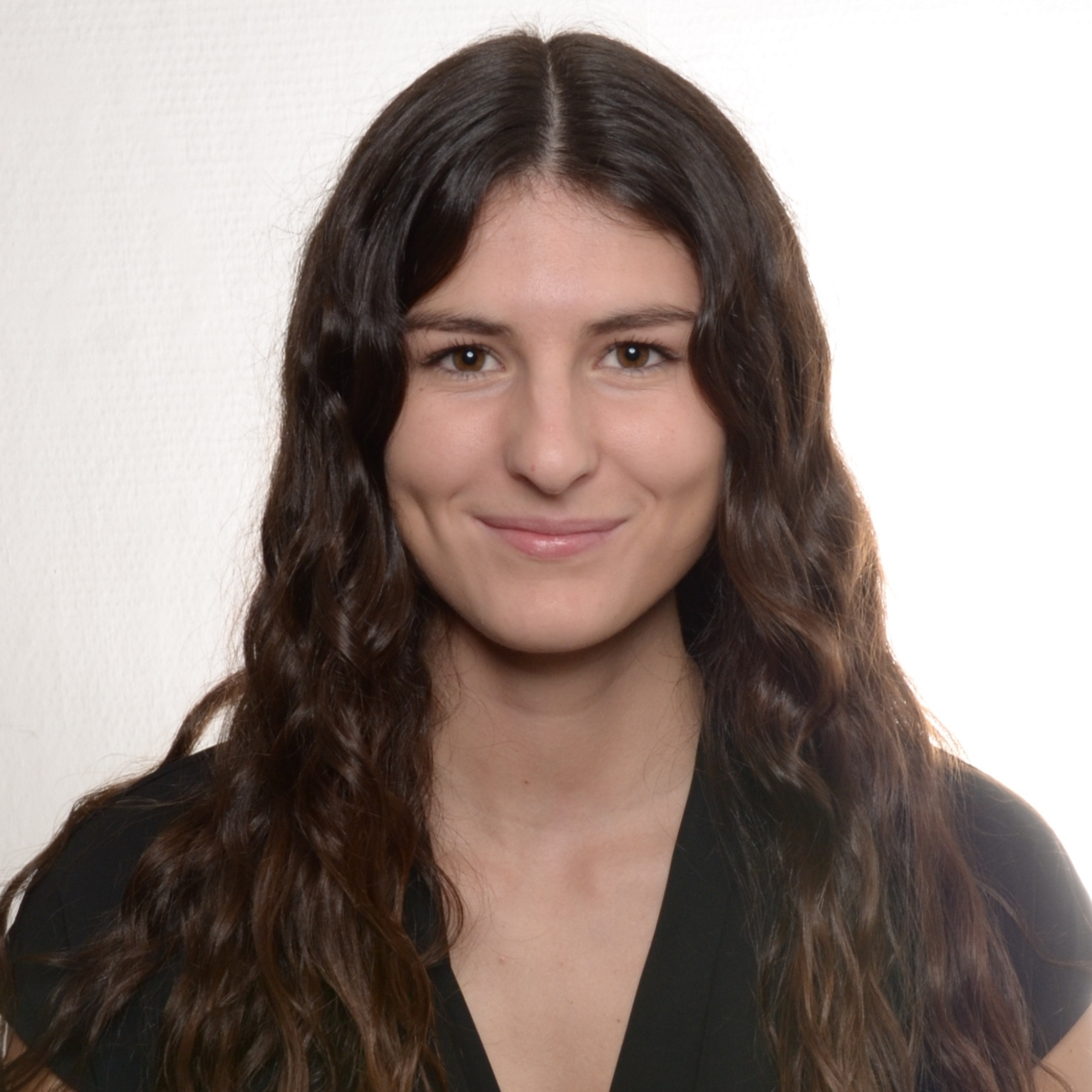 Originating from Barcelona, Laia’s educational journey led her to pursue secondary studies in the south of France. Her Bachelor’s degree in Economics and International Management allowed her to develop an analytical mindset. During her Master’s in International Business and Management, she engaged in numerous research study cases and actively participated in the creation of different business plans. This helped her develop an ability to critically analyze and address the strategic challenges that companies encounter.
 Andre has over 5 years of industry experience in project management, polymer and composite processing, materials characterization, and product development. He earned a Bachelor’s degree in Chemical Engineering from the Federal University of Santa Maria, Brazil, and a Ph.D. in Materials Science and Technology from the Federal University of Rio Grande do Sul, where he focused on Polymer and Composite materials. In 2012, he founded a design and manufacturing company specializing in biocomposites made with natural fibers, which he successfully sold in 2015.
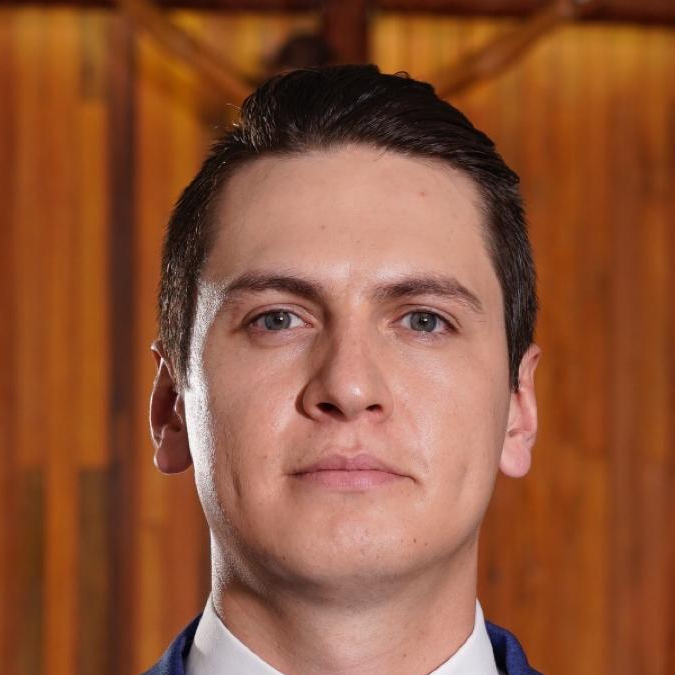 As an expert in sustainability, life cycle assessment, circular economy, and green chemistry, Nicolas possesses valuable skills and knowledge that can assist companies in developing and implementing sustainable and environmentally-friendly business models. They can achieve this by utilizing eco-friendly materials, improving manufacturing processes, reducing waste and hazardous chemical use, and advocating for the use of safer and more sustainable alternatives.
 Karan is an experienced professional who has worked in multiple geographies and roles along his career. He holds a total of 10+ years of experience in manufacturing operations, and has focused his efforts towards finding solutions for waste recovery and making recovery economical for industries.
  With several years of research experience in France and Canada, Fabien lends his expertise and passion for enzymology and microbiology to 5REDO’s sustainability innovation plans.
  With her significant hands-on experience in developing and characterizing biological and chemical systems, Vicky plays a key role in 5REDO’s efforts toward developing novel products and technologies that offer improved circularity and sustainability to the industry and society.
  As a recent graduate of chemical engineering from the University of Waterloo, Kyle brings his passion for impactful innovation and his experience with novel recycling processes to 5REDO to support our technology development initiatives.
  As our Senior Research Scientist, Hormoz draws on his eight years of industrial and nine years of academic research experience in the areas of polymer science and engineering to develop new solutions for advancing circularity and sustainability.
 Shauna is a freelance journalist that covers a wide range of topics, including health, education, the environment, travel, lifestyle trends, and more. She holds a Master of Journalism from Carleton University, and a Bachelor of Arts (Honours) in Global Development from Queen’s University.
 By leveraging her expertise in life cycle analysis and process engineering, Ophela helps 5REDO to take a holistic approach to the development of circular solutions and technologies.
  As the co-founder of 5REDO, Forough brings her expertise in supply chain management, business operations, inventory control, and revenue management to support the implementation of circular solutions within different industry sectors.
 With a passion for driving change and creating impact, Mahdi co-founded 5REDO to promote circular economy principles in Canada. He’s an alumnus of the 2021 Ellen MacArthur Foundation’s ‘From Linear to Circular Programme.’ Mahdi played a pivotal role in developing and managing the University of British Columbia’s (UBC) Circular Economy Seed Funding program, fostering partnerships between companies and academic researchers to co-create circular solutions.